

Retirement does not erase what you know. It does not wipe out your judgment, your relationships, your industry sense, or the business instincts you built over decades. If you are asking how to use your corporate experience after retirement, the real answer is not to start over. It is to use what already has value.
Many retired executives, managers, business owners, consultants, and corporate professionals still want income, purpose, and connection. They simply do not want the same full-time pressure, office politics, or hours-for-dollars routine. That is where a smarter post-retirement path begins. Your corporate experience can become consulting work, advisory income, part-time leadership, business introductions, cost savings consulting, or residual income that grows from relationships you already have.
How to use your corporate experience after retirement
The best way to understand how to use your corporate experience after retirement is to stop thinking of retirement as the end of your working value. It is better understood as a shift in how that value gets used.
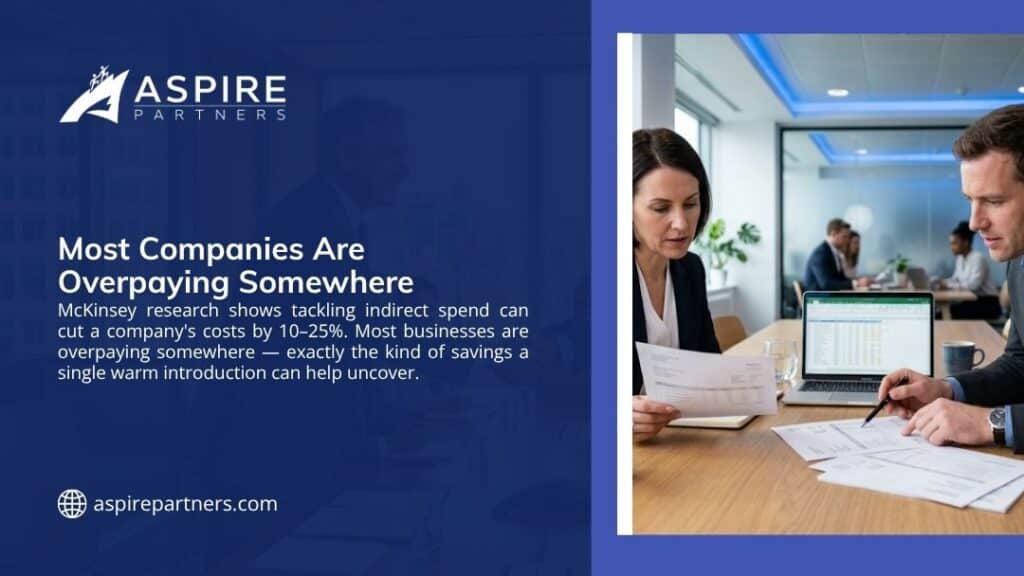
You may not want another executive role. Fair enough. After years of meetings, deadlines, budgets, board reports, hiring decisions, vendor issues, and problem-solving, most people want more freedom. But that does not mean your experience should sit unused. Companies still need people who understand how business decisions affect money, operations, vendors, and growth. They need steady judgment, trusted introductions, and professionals who can spot waste before it becomes expensive.
Your corporate experience can help you earn in several ways. Some retired professionals become consultants. Others step into fractional roles, board advisory work, executive coaching, mentoring, training, or relationship-based income models.
For well-connected professionals, one of the most practical options is helping companies access solutions that reduce expenses. Aspire Partners fits that space because it helps business professionals use their relationships to introduce companies to cost-saving opportunities, without asking them to sell, negotiate, or manage implementation.
If you want a business after retirement that respects your time, start by asking a simple question: what do people already trust you for? That answer usually points toward your best retirement income ideas.
For retirees who want a deeper look at this path, Aspire explains how professionals can explore business ideas for retirees that use your network without building a traditional company from scratch.
Why corporate experience still has value post-retirement
Here’s the thing: the experience that feels ordinary to you may solve expensive problems for someone else.
A former operations executive may notice inefficiency in a company’s vendor contracts within minutes. A retired CFO may understand where expenses hide. A former HR leader may know how benefits, compliance, and workforce costs affect profit. A sales leader may still have access to decision-makers that younger professionals would spend years trying to reach. That is not outdated experience. That is earned business judgment.
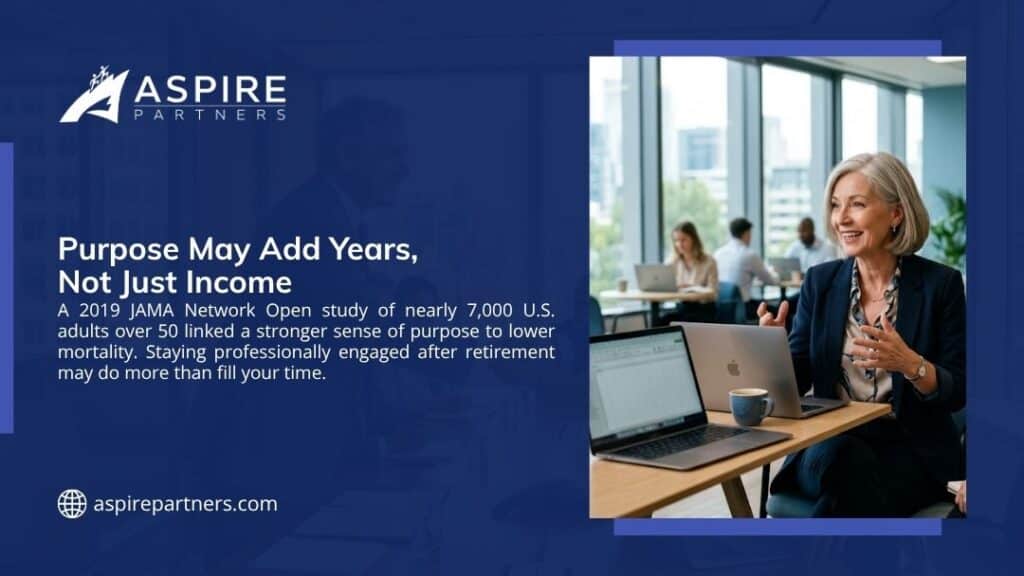
The labor market supports this shift. Pew Research has reported that older workers are growing in number and are often more likely than younger workers to describe their work as enjoyable and fulfilling. The Bureau of Labor Statistics reported that 19.5 percent of people age 65 and older participated in the labor force in 2024. In plain English, work after retirement is no longer unusual. For many people, it is part of a longer, more flexible retirement plan.
But not every retired professional wants to go back to a regular job. Some worry about age discrimination. Others do not want to update a resume, sit through interviews, or prove themselves to a younger manager. That is why relationship-based work can feel more natural. Instead of asking for permission to be hired, you use the credibility you already have.
Best income paths for retired professionals with corporate experience
If you search for best part-time jobs for retirees, you will find plenty of lists. Some are useful. Many are too broad. A retired corporate professional probably does not need fifty random suggestions. You need income paths that respect your background, your schedule, and your reputation.
| Income Path | Best Fit | Income Style | What to Consider |
| Independent consulting | Retired specialists, executives, operators, finance leaders | Project fees or retainers | Strong income potential, but you usually handle selling and delivery |
| Fractional executive work | Former C-suite leaders, VPs, directors, senior managers | Monthly retainer or contract pay | Good fit for experienced leaders, though it can start to feel like another job |
| Advisory or board roles | Senior professionals with industry credibility | Stipend, equity, or advisory fee | Valuable but often depends on access and reputation |
| Executive coaching or mentoring | Retired leaders who enjoy helping others grow | Hourly, package, or program-based | Purposeful work, but income varies widely |
| Teaching or corporate training | Professionals who can explain complex ideas clearly | Course fees, speaking fees, or part time pay | Strong for communication-focused retirees |
| Business introductions | Well-networked professionals with decision-maker contacts | Referral or residual income | Works best when the solution is credible and low pressure |
| Cost savings consulting partnership | Retirees with business relationships in any industry | Residual income potential | Good fit if you want to make introductions while others handle the heavy lifting |
The last two options deserve a closer look. Many retired professionals have spent decades in rooms with business owners, vendors, CEOs, CFOs, HR leaders, and operations teams. Those relationships can become useful again, especially when the conversation is not about selling something new, but about helping a company find savings.
Aspire Partners is built around that idea. A professional can introduce a business to cost savings solutions. Aspire and its vendor network handle the analysis, contracts, and implementation. The professional does not have to become a cost-reduction expert. They make introductions, not sales pitches. Aspire also explains how professionals can get paid for making business introductions in a more structured way.
How to make money in retirement without going back to a full-time job
There is a big difference between needing income and wanting another job. Many retirees search for how to make money in retirement because they want more room in the budget. Some want travel money. Some want to help their children or grandchildren. Others want to protect retirement savings from rising costs. AARP reported in 2026 that “many older Americans are returning to the workforce due to economic necessity,” a point that matters for retirees who want income but do not want to return to full-time employment.
The better question is not only how to make money after retirement. It is how to make money in a way that fits the life you actually want now.
A traditional part-time role may work for some people. It provides structure, steady hours, and predictable pay. But for retired executives and corporate professionals, part-time jobs for retired people can feel limiting if the work does not use their real strengths. A former VP may not want a shift schedule. A retired business owner may not want a manager. A former consultant may not want to bill every hour forever.
That is why second career ideas such as consulting, advisory work, corporate training, board service, and business introductions often make more sense. These paths use your judgment instead of asking you to trade every hour for a paycheck.
For readers who already know business owners or company decision-makers, Aspire’s guidance on side income ideas for business owners with strong networks highlights how relationships can function as a practical income channel.
Monetize your professional network without hard selling
One of the most overlooked ways to use corporate experience after retirement is to monetize your professional network. Not in a pushy way. Not by bothering people. Not by turning every old contact into a sales target. The right approach is much simpler. You connect people with something that may help them.
If you have worked in corporate life for 25, 30, or 40 years, you probably know business owners, executives, department heads, consultants, vendors, accountants, attorneys, HR leaders, finance teams, or operators. These people trust you because they know how you think. They have seen your professionalism. That trust has value.
Aspire Partners gives well-connected professionals a way to use that trust around a simple business need: saving money. Companies are often overspending on operational expenses without knowing it. A professional partner can ask whether a company would be open to a discovery call. From there, Aspire’s vendor network reviews possible savings. If no savings are found, there is no fee. If savings are found and the business moves forward, the referring professional may earn ongoing residual income.
You are not asking a company to buy a product it may not need. You are asking whether the company is open to finding out if it is overpaying. That small difference matters, especially when your reputation is on the line.
Aspire’s model can help retirees who want extra income for seniors, but do not want inventory, employees, office space, or a heavy consulting workload. If this sounds like a fit, you can explore more about how to monetize your professional network through relationship-based business introductions.
Cost savings consulting as a business after retirement
Cost savings consulting is a practical business in retirement because every company has expenses. Technology, healthcare, legal protection, lending, vendor contracts, payment systems, and operational costs can quietly eat into profit. Business leaders are busy. They may not have time to review every category, renegotiate every contract, or research every available savings option. That is where a cost savings partner can create value. Professionals entering the field later in their careers often ask why this work moved outside the company in the first place, and one article answers that directly.
Aspire Partners works with businesses across the USA and focuses on helping companies find savings. The model is simple enough to understand without a finance degree. A professional identifies a company that may be open to reducing costs. They book a discovery call or make an introduction. Aspire and its vendor network handle the deeper evaluation. If savings are found and accepted, the professional can earn compensation tied to that result.
This might work for a retired CFO who knows where money leaks from a company. It might work for a former HR executive who understands benefit costs. It might work for a retired sales leader who knows many business owners. It might even work for a former operations manager who spent years dealing with vendors, contracts, and service providers.
For example, a retired executive may know a business owner who is frustrated by rising operating costs. Instead of trying to solve the issue personally, that executive can introduce the company to Aspire’s cost savings process. Aspire and its vendor network review the opportunity, present potential savings, and handle the implementation if the business moves forward.
Aspire’s cost savings services for businesses include several areas where companies may uncover savings or operational value. For a retired professional, the appeal is not only the service list. It is the role. You are not doing the audit. You are not negotiating contracts. You are not managing implementation. You are using your relationships to start a useful conversation.
What to do after retirement to make money if you do not want another job
A lot of people search for what to do after retirement to make money, but what they really mean is this: how can I earn without giving up the freedom I just worked decades to get?
That is a fair question. Retirement age looks different now. Some people retire at 62. Some at 65. Some at 70. Some leave corporate life early and still have twenty or thirty healthy, active years ahead. The issue is not whether they can work. The issue is whether the work fits.
| If You Want | Better-Fit Option | Why It May Work |
| Extra income without fixed shifts | Business introductions | You can work through people you already know |
| Purpose without full-time stress | Mentoring or advisory work | You stay useful without daily operations |
| Higher-value work | Consulting or fractional leadership | You use experience built over decades |
| Low overhead | Cost-saving introductions | No office, no inventory, no employees |
| Social connection | Board, nonprofit, or local business advisory work | You stay active in the business world |
| Flexible work from home | Virtual consulting, coaching, or referral work | You control more of your schedule |
For retired people earning income, the best option is usually the one that does not recreate the old burnout. If you left corporate life because the pace was too much, do not build a new life that feels the same. Choose work that uses your experience without consuming your calendar.
Passive income for seniors: what is realistic and what is not
Passive income for seniors is a popular phrase, but it needs an honest explanation. Truly passive income usually comes from assets such as investments, rental income, royalties, or businesses with systems already in place. Most income requires some work at the start.
Residual income is different, and it may be more realistic for retired professionals with strong relationships. In a residual model, you do some work upfront, such as making an introduction, and you may receive ongoing compensation if that introduction creates lasting business value.
That is why Aspire’s model can be attractive to people who want passive income ideas for retirees but do not want to buy rental property, manage staff, launch an e-commerce store, or start a franchise-style operation. The professional makes the introduction. Aspire’s team and vendor partners handle the heavy lifting. If savings are delivered and the relationship continues, monthly income may continue as well.
Still, it should be said plainly: no income path is guaranteed. Results depend on the businesses introduced, the savings found, contracts, timing, and follow-through. A credible opportunity should make that clear. Aspire’s appeal is not a promise of effortless money. It is a structured way to turn business relationships into potential recurring income. Aspire provides further guidance on how residual income from business relationships works.
Should you go back to work after retirement?
Some retirees should go back to work. Some should not. The answer depends on money, health, family needs, purpose, taxes, Social Security, and the kind of work available.
If you are receiving Social Security before full retirement age, earned income can affect your benefits. For 2026, the Social Security Administration lists an annual earnings limit of $24,480 for people under full retirement age. For those who reach full retirement age in 2026, the limit is $65,160 for earnings before the month they reach full retirement age. Once you reach full retirement age, Social Security says there is no earnings limit for your benefit amount. Anyone in this situation should review the current rules and speak with a qualified tax or financial professional before making income decisions.
There are also disadvantages of working after retirement that people do not always talk about. Work can reduce free time. It can create stress. It may affect taxes. It may cause scheduling conflicts with travel, caregiving, health needs, or family plans. Some older workers also face age discrimination, especially in traditional job searches.
That is why returning to work after retirement does not have to mean returning to a regular job. Retirees going back to work can choose more flexible income paths. The better fit may be consulting, part-time advisory work, business development support, cost savings introductions, or project-based work that respects your calendar.
Best part-time jobs for retirees with executive experience
The best part-time jobs for retirees are not always the most advertised jobs. They are the roles that match experience, credibility, and energy level.
A retired executive may do well as a fractional COO, CFO, CMO, CHRO, or sales advisor. A retired finance leader might consult with small businesses that need stronger budgeting or cash-flow discipline. A former HR leader could advise companies on workforce planning or employee benefits. A retired business owner may mentor younger founders. A former corporate trainer may teach leadership, communication, or sales.
For many retired professionals, jobs for retired professionals should not be judged only by hourly pay. They should be judged by fit. Does the work use your experience? Does it protect your time? Does it feel meaningful? Can it create income without pulling you back into the same pressure you just left?
Some people search for jobs for women over 60 or jobs after 65 because they assume traditional employment is the only option. But experienced professionals often have stronger choices than low-level part-time work. The better answer may be consulting, coaching, advisory work, or a relationship-based business model where experience becomes credibility, not a liability.
How retired executives can turn relationships into residual income
If you have wondered how to use your corporate experience after retirement, look at the relationships first.
A retired executive often knows people who make business decisions. They may know owners, CEOs, CFOs, HR directors, procurement leaders, attorneys, bankers, insurance professionals, consultants, and local business groups. Those contacts are difficult to build from scratch. You already have them.
Here’s how it works in a cost savings model. You think of a business that may be overspending. You ask whether the owner or decision-maker would be open to a discovery call. You introduce them to Aspire Partners. Aspire and its vendor network review possible savings. If savings are found and the company moves forward, you may receive monthly residual income tied to the contract.
This is not cold calling. It is not a sales script. It is a warm introduction around a practical business issue: can this company reduce costs without adding more work to its plate?
For many older workers finding new careers post-retirement, this is an important distinction. They do not want to become beginners again. They want to use the reputation they already earned. Aspire’s model aligns with those exploring how to do the work once and get paid for years, especially professionals who understand that one strong introduction can be worth far more than dozens of small tasks.
How to prepare your resume and positioning after retirement
If you choose traditional work after retirement, your positioning matters. A resume for a retired person looking for part-time work should not read like a full career archive. It should show recent value, relevant skills, measurable wins, and the kind of role you want now.
Do not lead with the idea that you are retired. Lead with what you can help with. A former operations leader might position herself as a business operations advisor. A retired CFO might present himself as a fractional finance consultant. A former sales executive might focus on revenue strategy, partnerships, or business development.
A sample cover letter for a part-time job after retirement should sound current, useful, and specific. It should not apologize for age or explain too much personal history. The message can be simple: you bring deep experience, you are available for flexible work, and you can help the organization solve a defined problem.
Even if you never send another resume, this positioning still matters. Aspire’s model also depends on how you present yourself: not as someone looking for busy work, but as a trusted professional who can introduce companies to useful cost savings conversations.
This matters because age discrimination can appear quietly. Some employers make assumptions about technology skills, pace, salary needs, or adaptability. The best defense is not to hide your experience. It is to frame it around outcomes. Show that you can help now.
The best retirement income ideas start with what you already know
When people search 50 ways to make money in retirement, they often get a mixed bag of ideas. Some are fine. Some are too small for someone with corporate experience. A retired executive probably does not need 50 ideas. You need the right few.
| Asset You Already Have | Strong Income Idea | Real-World Example |
| Industry expertise | Consulting or training | Help companies solve problems you handled for years |
| Professional relationships | Business introductions | Connect companies with trusted cost savings solutions |
| Leadership credibility | Advisory or board work | Guide founders, nonprofits, or growing companies |
| Communication skill | Coaching, teaching, or speaking | Help younger leaders improve decision-making |
| Vendor knowledge | Cost savings consulting | Help companies uncover areas where they may overspend |
| Schedule flexibility | Project-based work | Choose assignments that fit your week |
Generating income in retirement is easier when you stop chasing random opportunities and start with what you already own: expertise, trust, and access. That is why business relationships matter so much. They are not just names in a phone. They are proof of a career spent building credibility.
Common mistakes retirees make when they try to earn again
The first mistake is chasing low-value work too quickly. There is nothing wrong with simple work if you enjoy it. But if you spent decades leading teams, managing budgets, or building companies, do not assume your only post-retirement option is an hourly job that ignores your experience.
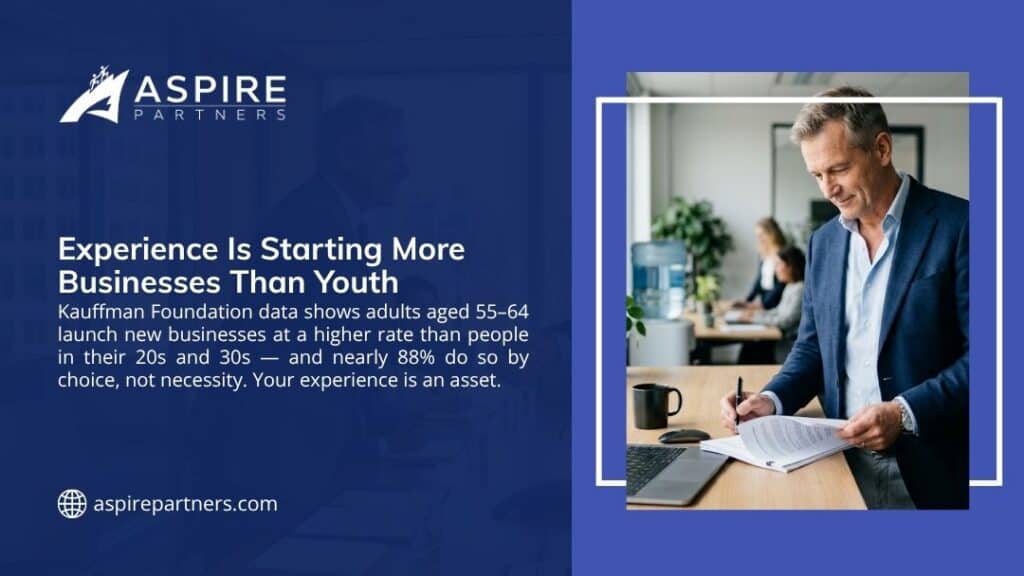
The second mistake is underpricing yourself. Many retired professionals feel awkward asking for money after leaving full-time work. They may call it “helping out” when it is really consulting. They may give away advice that saves a company thousands of dollars. Be generous, yes, but do not forget that your judgment has value.
The third mistake is building too much overhead. Starting a retirement business should not bury you in expenses. Be careful with models that require employees, inventory, rent, complex technology, or large upfront fees before you know the income path works.
The fourth mistake is ignoring Social Security, taxes, and retirement savings. Income is good, but it should be planned. Before you make major decisions, understand how earned income may affect your situation.
The fifth mistake is thinking you have to sell hard. Many retired professionals avoid business opportunities because they do not want to bother people. That is understandable. But a relationship-based introduction is not the same as a hard sell. When the solution is useful, and the conversation is respectful, your network may appreciate the connection.
The sixth mistake is overlooking models that separate the introduction from the delivery. For many retired professionals, that separation is the key. You can open the door without becoming the consultant, salesperson, analyst, or project manager.
How Aspire Partners can help retired professionals use corporate experience
Aspire Partners gives retired professionals a simple way to use their business experience and relationships. The company helps businesses find savings. Professionals introduce companies that may be overspending. Aspire and its vendor network handle the audit, analysis, contracts, and implementation. If savings are found and the business moves forward, the referring professional can earn residual income.
That model is a strong fit for retired executives, former business owners, consultants, corporate leaders, fractional advisors, and well-connected professionals who want a flexible way to make money after retirement. It is especially useful for people who do not want to sell products, manage clients, or build a traditional consulting firm from scratch.
The value is not just income. It is dignity, control, and continued relevance. You get to stay connected to the business world. You get to help companies solve a real problem. You get to use relationships you built over a lifetime. And you can do it alongside the retirement lifestyle you worked hard to create.
The real question is not whether your experience still matters. It does. The question is whether you want to use it through another job, another consulting grind, or a simpler relationship-based model.
To see how the model works, visit the Aspire Partners homepage. You can also review Aspire Partners testimonials to hear from people familiar with the opportunity, or schedule a conversation with Aspire Partners if you want to explore whether this path fits your background.
FAQs about using corporate experience after retirement
What is the best way to use corporate experience after retirement?
The best way to use corporate experience after retirement is to turn your judgment, skills, and relationships into flexible income. Good options include consulting, advisory work, fractional leadership, mentoring, business introductions, and cost savings consulting. The right choice depends on your energy, network, income goals, and how much responsibility you want.
How do retired people make money without full-time work?
Retired people make money through part-time consulting, advisory roles, online teaching, mentoring, writing, board work, referral partnerships, and business opportunities that use existing relationships. For corporate professionals, the strongest options usually come from expertise and trust, not low-skill side jobs.
Can you earn money after retirement and still collect Social Security?
Yes, you can earn money after retirement and collect Social Security, but earnings rules may apply before full retirement age. In 2026, Social Security lists earnings limits for people under full retirement age and for those reaching full retirement age during the year. Because the rules can affect benefits and taxes, it is wise to check the current SSA guidance and speak with a qualified professional.
What are the best paying jobs for retirees with corporate experience?
The best-paying jobs for retirees with corporate experience often include consulting, fractional executive work, board advisory roles, executive coaching, corporate training, business development consulting, and specialized industry advisory work. Cost savings consulting partnerships can also be attractive for well-connected retirees because they may create residual income potential.
What are the disadvantages of working after retirement?
The disadvantages of working after retirement can include less free time, added stress, tax complications, possible Social Security effects before full retirement age, health concerns, and age discrimination in the job market. The key is to choose work that supports your retirement instead of stealing it back from you.
Is cost savings consulting a good business for retirees?
Cost savings consulting can be a good business for retirees who have business relationships and want a low-overhead way to stay active. With Aspire Partners, the professional does not have to perform audits or manage implementation. Their role is to introduce companies that may benefit from savings opportunities. Readers comparing this path against other ventures can review which retirement businesses need almost no startup capital.
How can seniors make extra money from home?
Seniors can make extra money from home through remote consulting, coaching, virtual advisory calls, online training, writing, referral partnerships, and business introductions. Seniors making money online should focus on credible work that uses their experience rather than chasing quick-money schemes.
What should a retired person put on a resume for part-time work?
A retired person looking for part-time work should highlight relevant experience, measurable results, recent skills, flexible availability, and the specific problems they can solve. The resume should feel current and focused, not like a long career archive.
Your experience still has work to do
If you are asking how to use your corporate experience after retirement, start with what you already know and who already trusts you. Your career gave you more than a title. It gave you judgment, relationships, pattern recognition, and a practical understanding of how companies make and lose money.
You do not have to go back to the old grind to make money in retirement. You do not have to trade every hour for dollars. You do not have to buy a franchise, build a large business, or start from scratch. For the right person, a relationship-based model can turn professional trust into savings for companies and potential residual income for your family.
Aspire Partners gives experienced professionals a way to stay useful, earn flexibly, and help companies reduce costs without handling the hard parts alone. Your corporate experience still has value. Now it just needs the right place to work.