

The idea behind the do the work once get paid for years business model has shifted from theory to a practical income strategy for professionals who want more control over their financial future. Instead of trading hours for income, this model focuses on creating systems, relationships, or assets that continue to generate revenue long after the initial effort. For executives, consultants, and well-connected professionals, it opens a path to recurring income without building a traditional business from scratch.
Do the Work Once Get Paid for Years Business Model
The do the work once get paid for years business model refers to a structure where initial effort leads to long-term recurring earnings. Rather than restarting the income cycle every day, the system continues to produce results over time.
Here’s how it works in practice. A person creates value once, through a system, introduction, product, or partnership, and that value continues to generate income repeatedly. This contrasts sharply with traditional income models, where work stops, and income stops immediately after.
This approach aligns closely with the concept of residual income. Instead of relying on a paycheck tied to hours worked, income flows from previously completed actions. Over time, this creates a more stable and scalable financial structure.
What Is a Business Model and Why Does It Matter
A business model explains how value turns into revenue. It defines how a company operates, who it serves, and how it earns. Some business models depend on constant activity. Others rely on systems that continue to function after setup. This difference determines whether income grows or stalls. To make this clearer, consider the contrast:
| Business Model Type | Revenue Pattern | Dependency |
| Service-Based | One-time or hourly | High effort (Manual/Labor) |
| Product-Based | Transactional | Moderate effort (Production/Sales) |
| Subscription-Based | Recurring | System-driven (Tech/Platform) |
| Relationship-Based | Ongoing residuals | Network-driven (Trust/Retention) |
The do the work once get paid for years business model fits within system-driven and relationship-based categories. It does not require constant reinvention. Instead, it builds on structure.
Understanding this distinction matters because most people choose a business model without realizing its long-term impact. A model that depends on daily effort limits growth. A model built around recurring value expands over time.
Residual Income Definition and How It Works
Residual income refers to earnings that continue after the initial effort has been completed. The residual income definition centers on the idea of recurring revenue generated without repeated labor.
Unlike active income, which requires ongoing work, residual income builds over time. The first phase often requires effort, but once the system is in place, income continues with minimal involvement. To understand how this works, consider the difference:
| Income Type | Effort Required | Duration of Income |
| Active Income | Continuous (Trading time for money) | Stops when work stops |
| Residual Income | Front-loaded (Upfront effort/capital) | Continues for months or years |
This model allows individuals to build multiple income streams that operate simultaneously. Over time, these streams can create a compounding effect, leading to financial stability and long-term wealth.
Types of Business Models That Generate Residual Income
Not all business models support long-term recurring income. Some are built for transactions, while others are designed for continuity.
| Business Model Type | Initial Effort | Recurring Income Potential | Scalability |
| Subscription Model | Moderate | High | High |
| Licensing & Royalties | High | Medium to High | Medium |
| Affiliate/Referral Model | Low to Moderate | High | High |
| Network-Based Model | Low | High | Very High |
Subscription models rely on ongoing payments for services. Licensing generates income from intellectual property. Referral-based systems, however, operate differently. They depend on relationships rather than products.
This is where modern business modeling evolves. Instead of creating something new, individuals leverage what they already have: connections.
Why Most Income Models Keep You Stuck (And What Changes Everything)
Most income systems follow a predictable pattern. Work begins, effort is applied, and payment follows. When the work ends, the income stops.
This structure creates a ceiling. Even high earners face limits because time remains finite. There are only so many hours available, regardless of skill level.
This is why many professionals start searching for alternatives. They realize that increasing effort does not always lead to proportional income growth.
The do the work once get paid for years business model changes this dynamic. Instead of repeating the same tasks, it focuses on creating outcomes that continue to produce value. Once the system is in place, income flows independently of daily activity.
This shift does not remove effort entirely. It changes when and how effort is applied. The emphasis moves toward strategic actions rather than continuous work.
Residual Income Examples That Actually Work in 2026
Residual income is no longer limited to real estate or investments. New models have emerged, especially in business-to-business environments.
| Income Stream | Initial Effort | Monthly Residual Potential | Risk Level |
| Rental Income | High | Medium | Medium |
| Digital Products | Medium | High | Low |
| SaaS Subscriptions | High | High | Medium |
| Business Referrals | Low | High | Low |
Among these, referral-based income stands out. It requires less capital and avoids operational complexity. Instead of managing assets or creating products, individuals connect businesses with solutions.
The Rise of Relationship-Based Residual Income Models
Business relationships have become one of the most underutilized assets in modern income strategies. Many professionals spend decades building networks but never monetize them.
Here’s the shift. Instead of selling products or services directly, individuals introduce businesses to solutions that create measurable value. When those solutions deliver results, recurring income follows.
This model works because trust already exists. A simple introduction carries more weight than a cold pitch. And since fulfillment is handled by specialized providers, the individual avoids operational responsibilities.
Case Study: A Modern Proven Business Model in Action
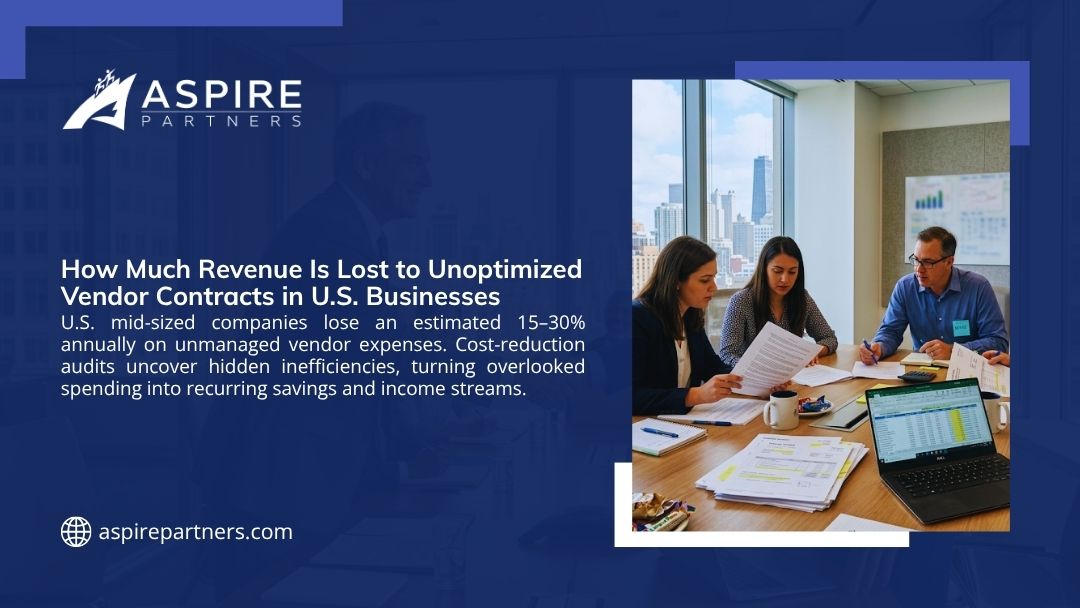
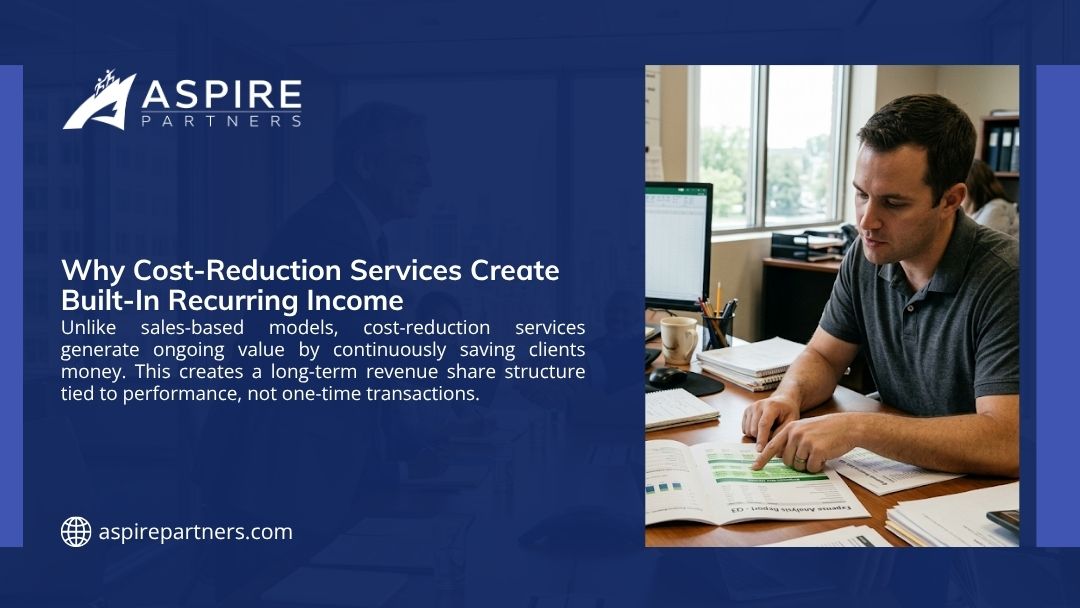
A growing number of professionals now use structured systems that allow them to earn through introductions. These systems focus on cost-reduction services, where businesses save money on operational expenses.
The process remains straightforward. A professional identifies a company that may be overspending. They introduce the company to a trusted network. After that, the service providers handle everything, from analysis to implementation.
This structure reflects a broader shift in business modeling. Instead of building a new business, individuals plug into an existing framework. The concept aligns with how to earn residual income from business relationships through structured networks.
Why This Model Appeals to Executives and Consultants
Experienced professionals often hesitate to start new ventures. The reason is not a lack of interest but a lack of time. Traditional businesses demand attention, resources, and operational oversight. For readers still exploring options, we compare several part-time consulting opportunities for busy professionals and the hours each one realistically requires. Our overview of low-time-commitment business options compares models that suit people with only evenings and weekends to spare.
This model removes those barriers. It does not require hiring staff, managing clients, or maintaining infrastructure. The focus remains on connections.
Executives and consultants already possess the key asset: relationships. Years of experience have created networks that include decision-makers, business owners, and industry leaders. These connections become the foundation for income.
Another advantage lies in flexibility. The model can operate alongside existing commitments. It does not interfere with primary roles, which makes it suitable for those seeking additional income without disruption.
For professionals exploring side hustle ideas for executives with business experience, this approach offers a structured alternative that aligns with their strengths.

Data-Backed Benefits of Residual Income
Recent data shows a steady shift toward diversified income streams. According to the U.S. Bureau of Labor Statistics, more professionals now rely on multiple sources of income to reduce financial risk.
At the same time, research from the Small Business Administration indicates that businesses with recurring revenue models tend to maintain more stable cash flow over time.
These findings highlight why residual income models continue to gain traction. They offer predictability, which remains rare in traditional income structures.
Another important factor is resilience. During economic uncertainty, income tied to long-term contracts or recurring services tends to hold up better than transactional revenue.
Common Mistakes in Choosing a Business Model
Choosing a business model often determines long-term outcomes. Many individuals focus on short-term gains without considering sustainability.
| Mistake | Impact | Better Approach |
| Chasing quick income | Inconsistent results | Focus on recurring systems |
| Ignoring proven models | Higher risk | Use established frameworks |
| Overcomplicating operations | Burnout | Keep structure simple |
| Underestimating networks | Missed opportunities | Leverage existing relationships |
A more effective approach involves selecting models that align with existing strengths. Systems that reduce complexity while maintaining scalability tend to perform better over time.
How to Choose the Right Residual Income Business Model
Selecting the right model requires careful evaluation.
| Criteria | Key Question |
| Time Investment | How much time can be allocated initially? |
| Risk Level | Is capital required upfront? |
| Network Strength | Do existing relationships create opportunities? |
| Scalability | Can income grow without additional effort? |
A model that aligns with personal strengths and existing resources often produces better results.
Building Monthly Residual Income Step-by-Step
Creating consistent residual income requires a structured approach. The process does not depend on constant activity but on strategic actions taken at the right time.
| Step | Action | Outcome |
| 1 | Identify businesses in the network | Opportunity creation |
| 2 | Initiate introduction | Connection established |
| 3 | Submit referral to the system | Process begins |
| 4 | Allow experts to execute | Value delivered |
| 5 | Earn recurring income | Long-term revenue |
Each step builds on the previous one. The system handles complexity, while the individual focuses on relationships. For those evaluating side income ideas for business owners with a network, this structure provides a clear path.
Why the Do the Work Once Get Paid for Years Business Model Is Growing Fast
Several factors explain the rise of this model. Economic uncertainty has encouraged professionals to look beyond traditional income sources. At the same time, technology has made it easier for businesses to connect with specialized services.
Another reason lies in efficiency. Professionals no longer want to trade more time for incremental income. They prefer systems that allow income to grow without increasing workload.
The do the work once get paid for years business model meets this demand. It combines simplicity with scalability. The initial effort remains focused, while the results extend over time. The growth of service networks has also contributed. These networks provide infrastructure, expertise, and execution. Individuals no longer need to build systems themselves. They participate instead.
FAQs
How does residual income differ from active income?
Residual income continues after the initial effort, while active income stops when work stops.
Is residual income truly passive?
Not entirely. It requires upfront effort, but ongoing involvement is minimal once the system is established.
What are common residual income examples?
Examples include subscriptions, licensing, digital products, and referral-based income systems.
Who benefits most from this model?
Professionals with strong networks, such as executives, consultants, and advisors, often see the greatest results.
How long does it take to build residual income?
It varies. Some models take months to generate consistent income, depending on the system and effort applied.
Is this model risky?
Risk depends on the structure. Proven systems with low upfront costs tend to reduce financial exposure.
Can this model replace a full-time income?
In some cases, yes. Over time, multiple residual income streams can create substantial earnings.
Turning Connections Into Long-Term Income
The do the work once get paid for years business model is not a shortcut. It is a different way of thinking about income. Instead of repeating effort, it focuses on creating lasting value.
For professionals who already have strong networks, the opportunity often lies closer than expected. The key is recognizing that those relationships can become structured income streams when paired with the right system.
Those who want to explore how structured models operate in real scenarios can review real-world outcomes and feedback through verified experiences on the Aspire platform. Taking the next step often starts with a simple conversation. Those interested in understanding how these systems operate can reach out through a direct consultation.
The opportunity does not require building from scratch. It requires recognizing the value already present and putting it to work.