

For most professionals, income has always been tied to effort. You work, you get paid. You stop, income slows. That model has held for decades, but it is no longer the only path. There is another route that sits quietly beneath years of professional experience: your network. This article explains how to earn residual income from business relationships in a way that does not require selling, hiring, or running operations.
It focuses on turning existing trust and connections into a steady income stream. For executives, consultants, and experienced professionals, this approach often becomes one of the most practical ways to build long-term financial stability.
What follows is not theory. It is a structured breakdown of how relationship-based income works, why it is gaining traction, and how it can fit into a modern passive income strategy.
How to Earn Residual Income From Business Relationships
To understand how to earn residual income from business relationships, it helps to look at what most professionals already have. Years of meetings, partnerships, referrals, and collaborations create what can be described as relationship capital. That capital rarely appears on a balance sheet, yet it carries real economic value.
Instead of trading time for money, this model allows professionals to connect businesses with solutions they already trust. When those solutions deliver measurable results, compensation follows. The key difference is that the individual does not perform the service. They facilitate the introduction.
Here’s what makes this approach distinct. It removes operational responsibility. It removes the need for technical expertise. And it separates income from daily effort. That shift is what places it closer to residual income than traditional consulting or advisory work.
What Is Passive Income and Residual Income? (And Why Most People Get It Wrong)
The terms passive income and residual income often get mixed up, but they are not identical. Passive income refers to earnings generated with minimal ongoing effort after an initial setup. Under the IRS passive activity rules, passive income refers to earnings generated with minimal ongoing effort after an initial setup. For example, rental properties and dividend stocks. On the other hand, residual income continues to pay as long as the result remains active, such as a contract or subscription. A simplified comparison highlights the difference:
| Income Type | Definition | Ongoing Effort | Example |
| Passive Income | Earnings from assets after initial work | Low | Real estate rental income |
| Residual Income | Earnings that continue after a transaction or agreement | Minimal | Revenue share from referrals |
The distinction matters because relationship-based income aligns more closely with residual income. Once a business relationship leads to a successful outcome, the income continues for the duration of that agreement.
Why Business Relationships Are One of the Most Overlooked Passive Income Assets
Most people don’t think of their network as something that can produce income on its own. It’s usually seen as a support system, helpful for advice, career moves, or referrals when needed. But rarely as a structured income source. That’s where the gap sits.
A professional who has spent 15 or 20 years in corporate roles, consulting, or business development has likely built hundreds of trusted connections. A professional who has spent 15 or 20 years in corporate roles, consulting, or business development has likely built hundreds of trusted connections, consistent with research on networking and LinkedIn use. Some of those relationships involve decision-makers. Others include vendors, partners, or service providers. Over time, that becomes a quiet asset, one that doesn’t show up on paper but carries real influence.
Here’s the part many overlook: businesses constantly overspend. Not occasionally, but routinely. Contracts go unchecked. Vendors remain in place for years. Processes drift. It’s not always intentional, just a byproduct of growth and limited oversight.
When someone from a trusted network brings a credible solution to that business, the conversation starts differently. There’s less resistance. Less skepticism. The door opens faster.
Compare that to traditional passive income strategies. Real estate needs capital and management. The stock market requires timing and patience. Online income streams often depend on building an audience from scratch.
A network, on the other hand, already exists. And that’s what makes it powerful. It’s not about creating something new. It’s about using what’s already there, relationships built over time, and placing them into a structure that can generate ongoing returns.
Traditional Passive Income Ideas vs Relationship-Based Income
A closer look at common income strategies shows where relationship-based income stands apart.
| Method | Time Required | Risk Level | Scalability | Effort Type |
| Real Estate Investments | High upfront | Medium | Moderate | Management and capital |
| Stock Market | Ongoing monitoring | Medium to high | High | Analytical |
| Affiliate Marketing | Content creation | Medium | High | Marketing-driven |
| Business Relationships Model | Minimal after intro | Low | High | Relationship-driven |
While traditional methods rely on capital or ongoing effort, relationship-based models rely on access and trust. That difference shifts the entry barrier significantly.
7 Proven Ways to Earn Residual Income From Your Network
There isn’t just one way to turn relationships into income. Over time, several approaches have proven reliable, especially for professionals who prefer working through trust rather than transactions.
The most straightforward path starts with referral-based partnerships. A professional connects a business to a service provider they trust. If that provider delivers measurable results, the referring individual earns a share of the outcome. This works particularly well in industries tied to cost savings or performance improvement.
Another method involves strategic introductions tied to operational improvements. Instead of promoting a product, the professional introduces a business to specialists who identify inefficiencies. The value lies in opening the door, not solving the problem directly.
Affiliate partnerships exist in the B2B space as well, though they tend to be more selective. Software platforms, financial tools, and consulting services often provide recurring commissions when clients remain active over time. The key difference here is that the relationship must already carry credibility; otherwise, the model struggles.
Some professionals move into advisory roles where compensation includes a revenue share. This usually happens after years of industry involvement, where their input carries weight beyond introductions. It’s less passive than other options but can still produce ongoing income.
Business matchmaking has also gained traction. In this case, the professional connects two companies that benefit from working together. If a long-term agreement forms, the individual may receive compensation tied to that relationship.
Licensing access to a network is less common but still relevant. In niche industries, professionals sometimes allow service providers to tap into their connections in exchange for structured compensation.
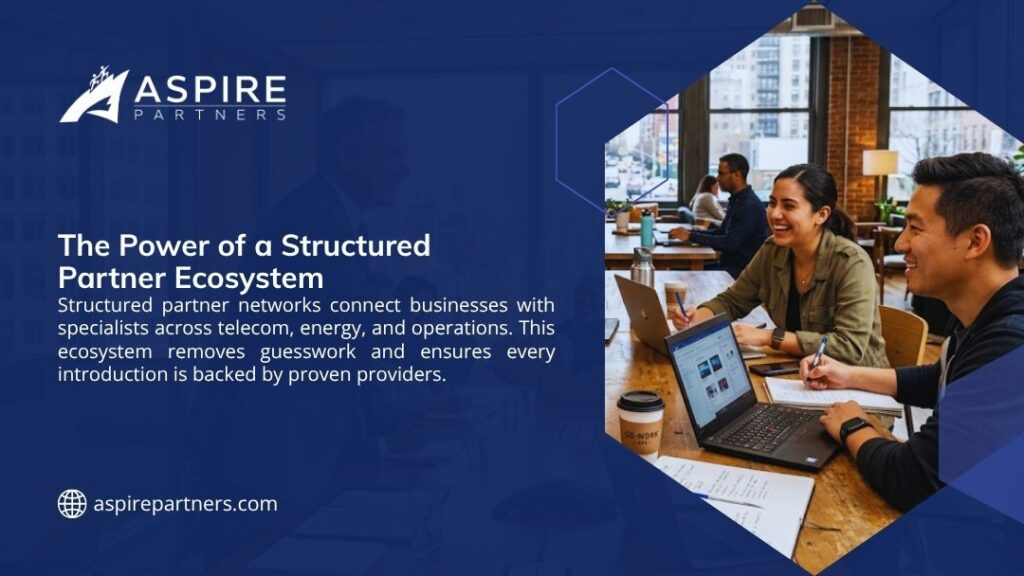
Then there are structured partner programs that formalize the entire process. These systems remove guesswork. A professional identifies an opportunity, makes an introduction, and the rest is handled by specialists. The appeal here is consistency. Instead of managing multiple informal arrangements, everything runs through a defined framework.
Each of these approaches shares one thing in common: the relationship does the heavy lifting. The income follows when value is delivered.
Residual income has long been tied to financial independence, but the principle behind it is simple. As noted by Investopedia, Residual income is income that continues to be generated after the initial effort has been expended. That idea applies directly to relationship-based income, where the effort happens upfront, and the returns continue as long as the underlying agreement remains active.

Case Study: A Low-Cost Model That Turns Introductions Into Monthly Income
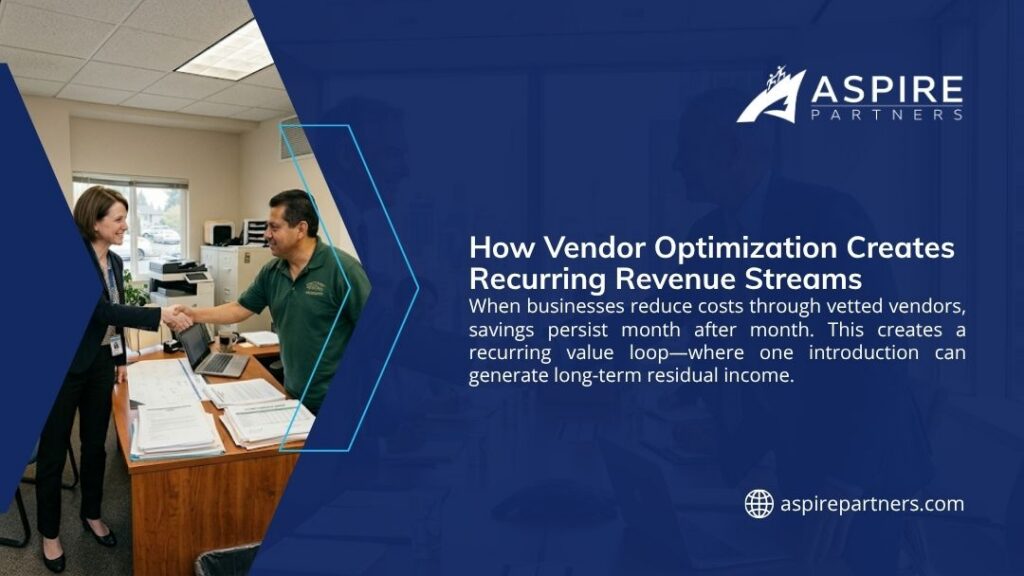
A structured partner model offers a clear example of how this approach works in practice. A professional identifies a business within their network that may be overspending in areas such as operational costs or vendor contracts. Instead of attempting to solve the issue, they introduce the business to specialists.
From that point forward, the process shifts entirely to experts who conduct audits, present findings, and implement solutions. The professional remains outside the operational process. This structure becomes clearer when reviewing how the process unfolds:
| Step | Action | Responsibility |
| Identification | Find a business with potential inefficiencies | Professional |
| Introduction | Connect business with specialists | Professional |
| Analysis | Conduct an audit and identify savings | Service providers |
| Implementation | Execute cost reduction strategies | Service providers |
| Compensation | Receive ongoing payments | Professional |
A model like this reflects the approach used by a structured partner model for professionals, where individuals leverage relationships rather than technical skills. Those interested can review how these services are delivered through detailed service breakdowns and explore real partner experiences to understand how the model operates in practice.
Cost Comparison: Traditional Business vs Relationship-Based Model
The financial barrier to entry often determines whether someone pursues a new income stream. A comparison highlights the difference.
| Model | Startup Cost | Risk Level | Time to Income | Complexity |
| Franchise | $75,000–$100,000 | High | Medium to long | High |
| Consulting Business | Moderate | Medium | Medium | High |
| Real Estate | High | Medium | Long | Medium |
| Relationship-Based Model | Low monthly fee | Low | Short to medium | Low |
This contrast explains why many professionals are beginning to evaluate alternative income models that do not require significant capital or operational responsibility.
How to Get Started (Even With No Selling Experience)
Starting does not require a background in sales or consulting. The process begins with identifying businesses within an existing network. These could be former clients, colleagues, or partners.
Once identified, the next step involves recognizing areas where those businesses may be overspending or underperforming. Instead of attempting to diagnose the problem in detail, the goal is to open a conversation.
A structured system simplifies this process by providing scripts, training, and support. Professionals who want to explore how this model works in detail often begin by reviewing available frameworks and understanding how introductions translate into income.
Common Mistakes to Avoid When Trying to Build Passive Income
Most setbacks don’t come from lack of effort. They come from choosing the wrong approach or expecting quick results. A closer look at common mistakes shows where things usually go off track.
| Mistake | What Happens | Better Approach |
| Chasing trends | Time gets scattered across ideas that don’t last | Focus on one stable model |
| Over-investing early | High risk before understanding the system | Start with low-cost entry models |
| Trying to do everything | Burnout and inconsistent results | Use systems where experts handle execution |
| Ignoring the existing network | Missed opportunities within known contacts | Start with relationships already built |
| Expecting instant income | Frustration and early drop-off | Allow time for relationships to convert |
Avoiding these mistakes doesn’t guarantee success, but it removes unnecessary friction. The goal is steady progress, not quick wins.
Who This Model Works Best For
This approach tends to fit people who have spent years building credibility, even if they’ve never thought of it as an asset.
Corporate professionals often find it useful because they already understand how businesses operate. They’ve seen inefficiencies firsthand. That makes conversations more natural. Consultants and advisors usually adapt quickly as well. They are used to identifying problems, even if they don’t want to manage solutions directly.
Retirees or recently exited executives often see the most immediate benefit. They no longer want the demands of running a business, but they still have strong relationships. This model gives those connections a purpose without adding complexity.
It also works for individuals exploring alternatives to traditional business ownership. Instead of investing heavily in a new venture, they can start with something that builds on existing experience.
The common thread isn’t a specific job title. It’s access. If someone has built trust over time, they already have what they need to begin.
Income Potential and Realistic Expectations
Income varies based on network strength, consistency, and the number of active relationships. A realistic overview provides perspective.
| Scenario | Monthly Income Potential | Time Commitment |
| One active referral | Moderate | Low |
| Multiple referrals | High | Moderate |
| Established network | Scalable | Low ongoing |
The key factor is not volume alone but the quality of relationships and the relevance of the solutions introduced.
Why This Approach Is Gaining Momentum in 2025 and 2026
There has been a noticeable shift in how professionals think about income. Stability used to come from a single role or business. Anyone not yet ready to leave a salaried position can read about building side income without quitting your job. That assumption no longer holds the same weight. Several factors are driving interest in relationship-based income models.
First, businesses are under pressure to reduce costs. Inflation, operational inefficiencies, and changing market conditions have forced companies to look more closely at spending. That creates demand for solutions that can deliver measurable savings. A separate breakdown covers what is driving this outsourcing shift across mid-market firms right now.
Second, the rise of fractional work has changed expectations. Many professionals no longer want to commit to one organization full-time. They prefer flexible income streams that can run alongside existing commitments.
Third, technology has removed barriers that once limited access. Conversations that required in-person meetings now happen remotely. Introductions can be made quickly, and follow-ups happen without delay.
There’s also a growing awareness around low-risk business models. High upfront investments, like franchises or large-scale startups, feel less appealing when alternatives exist that require minimal capital.
What stands out is not just the opportunity itself, but the timing. The conditions supporting this model, demand for cost savings, flexibility, and low-risk entry, are all moving in the same direction.
FAQs
How to earn residual income from business relationships online?
It starts with identifying businesses you already know and connecting them with trusted service providers who operate remotely. Once the introduction is made, most of the process happens online, including evaluations and implementation.
How to generate passive income with no initial funds?
One practical route is to use existing relationships instead of capital. By connecting businesses to solutions that create value, income can be generated without upfront investment.
What’s the easiest way to make residual income?
The simplest approach usually involves referral-based models where you introduce a business to a service provider and receive ongoing compensation when results are delivered.
What is the 7 3 2 rule?
The 7-3-2 rule often refers to maintaining consistent outreach: contacting seven people, having three meaningful conversations, and creating two opportunities. It’s a guideline used in relationship-driven income models.
What is Warren Buffett’s 90/10 rule?
This principle suggests allocating 90% of investments into low-cost index funds and 10% into higher-risk opportunities. While not directly tied to residual income, it reflects the idea of balancing stability and growth.
How can I build multiple streams of income without starting a business?
Using structured partner systems allows professionals to create income streams by making introductions rather than building and managing operations themselves.
Where This Can Lead
For those who have spent years building relationships, the idea of starting from scratch often feels unnecessary. A different path exists, one that builds on what is already in place.
Exploring a structured approach can help clarify how introductions translate into recurring income. Those ready to take a closer look can connect with the Aspire Partners team and see how this model fits within their own professional landscape. And that’s why it matters.