

For years, professionals spent time building relationships, attending networking events, helping clients, answering calls, making introductions, and becoming the person others trust when business problems appear. Most never considered that those relationships could become a long-term income source. That has started to change.
Executives, consultants, advisors, and experienced connectors now look at their professional network differently. Instead of chasing another startup idea or sinking money into a franchise, many are searching for practical ways to create recurring revenue from people already in their network. And that shift matters because the cost of launching traditional businesses keeps climbing while trust has become harder to earn.
This article explains how connectors and networkers can earn passive income through relationship-based opportunities, why passive networking has become more valuable in today’s economy, and how experienced professionals use strategic introductions to create long-term recurring income without becoming salespeople or operators.
How Connectors and Networkers Can Earn Passive Income?
The phrase “your network is your net worth” gets repeated so often that many professionals tune it out. But here’s the thing. In business, trusted relationships hold measurable value. Companies spend enormous amounts on customer acquisition, advertising, lead generation, and outbound sales because trust rarely exists at first contact.
A recommendation changes that dynamic immediately. When respected professionals introduce businesses to proven service providers, conversations move faster. Skepticism drops. Decision-makers listen differently. That trust transfer carries weight, especially in industries where companies lose money through hidden operational inefficiencies.
That is where relationship-based passive income enters the picture. Instead of selling products directly, connectors create value by identifying businesses that may benefit from cost-reduction evaluations, financial services, operational audits, or vendor solutions. After the introduction, specialists handle the technical work.
The connector remains the trusted relationship bridge. This model appeals to professionals because it aligns with how relationships naturally function in the business world. Most executives already recommend attorneys, lenders, consultants, recruiters, accountants, and software providers when colleagues ask for help. The difference here is that structured referral partnerships attach recurring compensation to those introductions.
Passive networking becomes less about collecting contacts and more about building long-term strategic relationships that continue producing value over time.
| Traditional Networking (Sales-Led) | Passive Networking (Trust-Led) |
| Transactional conversations | Relationship-driven conversations |
| One-time opportunities | Recurring revenue potential |
| Constant prospecting | Warm introductions |
| High-pressure sales | Trust-based recommendations |
| Short-term interactions | Long-term relationship equity |
That shift explains why more professionals now view their network as a financial asset rather than a social activity.
Why Relationship Capital Has Become More Valuable Than Ever
Trust now influences buying decisions more than advertising.
According to the 2024 Edelman Trust Barometer, people consistently trust recommendations from individuals they know more than branded marketing messages. Businesses understand this reality, which explains why referral-driven growth has become a priority across industries.
At the same time, customer acquisition costs continue rising. Research from Harvard Business Review shows that acquiring a new customer can cost five to twenty-five times more than retaining an existing one. That pressure forces companies to look for trusted introductions instead of relying solely on cold outreach.
And that changes the economics for connectors. A well-connected professional may know business owners struggling with rising costs, executives frustrated by inefficient vendors, healthcare practices losing revenue, firms overspending on technology, and companies searching for operational savings.
Those relationships already exist. The opportunity lies in connecting those businesses with specialists capable of solving those problems. That is why relationship capital now holds real economic power.
The modern marketplace rewards credibility. People in your network often trust your judgment because the relationship has developed over years, sometimes decades. That trust cannot be duplicated through ads, funnels, or automated campaigns.
Stephen M. R. Covey wrote in “The Speed of Trust” that “Trust is the one thing that changes everything.” That observation still shapes modern business strategy because trusted introductions reduce friction in decision-making.
The Difference Between Traditional Networking and Passive Networking
Many professionals dislike networking because they associate it with awkward conversations, forced sales pitches, and crowded networking events filled with transactional exchanges. Passive networking works differently.
Instead of trying to work the room, passive networking focuses on long-term credibility. It grows through consistency, reputation, and meaningful business relationships.
A connector may spend years helping others without expecting immediate compensation. Over time, those relationships become valuable because people remember who solved problems, who made helpful introductions, and who built trust instead of chasing commissions. That distinction matters.
Traditional networking often prioritizes volume. Passive networking prioritizes trust density.
| Traditional Approach | Passive Networking Approach |
| Collect contacts | Build trusted relationships |
| Short-term gains | Long-term recurring income |
| Aggressive outreach | Strategic introductions |
| Sales-first mindset | Problem-solving mindset |
| Cold opportunities | Warm relationships |
Professionals who succeed in passive networking rarely sound like salespeople. They sound like advisors. And that subtle difference changes how opportunities develop.
Why Experienced Professionals Are Turning to Relationship-Based Income Models
Corporate careers look different today than they did twenty years ago. Layoffs hit senior executives faster. Consulting roles became fractional. Retirement timelines shifted. Many professionals now want income diversification without taking on another full-time business. Our breakdown of flexible consulting work for professionals shows which arrangements fit around a demanding calendar.
That explains why relationship-based income models attract experienced professionals. A retired executive may no longer want employees, office leases, payroll stress, or operational headaches. A consultant may want another income stream without trading additional hours for money.
A business advisor may already know dozens of companies that overspend in operational categories. The relationships already exist. What has changed is the ability to monetize those relationships through structured referral partnerships.
Many professionals also dislike modern side-hustle culture because it often revolves around influencer branding, content creation, dropshipping, affiliate spam, cryptocurrency speculation, and online course saturation.
Those models rarely fit established professionals with decades of business credibility. Relationship-based income models feel different because they align with existing experience instead of requiring a completely new identity.
That is one reason executive-focused opportunities continue gaining traction. Professionals want flexibility, recurring income, and low overhead without sacrificing reputation.

The Problem With Most Passive Income Advice
Search results for passive income usually produce the same recycled suggestions. Start a YouTube channel. Launch an eCommerce store. Buy rental properties. Become an influencer. Sell digital products.
But here’s the problem. Most of those ideas demand:
- constant content creation
- technical expertise
- large upfront capital
- inventory management
- paid advertising
- customer service
- fulfillment operations
Many are not passive at all. Some become second full-time jobs disguised as freedom. That disconnect frustrates experienced professionals because they already possess something more valuable than many online creators: established trust.
An executive with thirty years of business relationships may hold more practical earning potential through trusted introductions than through learning TikTok algorithms.
That is why relationship-based residual income models continue attracting attention. They rely less on trends and more on credibility. And credibility tends to age well.
How Referral-Based Residual Income Actually Works
Referral-based residual income follows a straightforward structure. A connector identifies a business relationship that may benefit from operational savings or specialized services. After the introduction, experts perform the audits, analysis, vendor negotiations, implementation, and support.
If the client moves forward and savings are delivered, recurring compensation may continue for the duration of the relationship. The connector does not manage fulfillment. To plan ahead, see our guide on what delays a connector’s first earnings and how long a typical deal takes to close.
That separation matters because it allows professionals to stay within their natural role: trusted advisor, introducer, connector, or relationship bridge.
| Step | What Happens |
| Identify Opportunity | A business may overspend in operational areas |
| Make Introduction | Connector introduces business to specialists |
| Evaluation Begins | Experts conduct audits and recommendations |
| Implementation | Vendor teams handle execution |
| Residual Compensation | Connector earns recurring monthly income |
This model explains why more professionals explore opportunities tied to recurring revenue rather than one-time commissions.
Aspire Partners highlights how professionals can build long-term earnings through trusted introductions, focusing on residual income from business relationships.
Why Trust Matters More Than Sales Skills
One reason professionals hesitate to explore referral opportunities is fear of becoming salesy. That concern makes sense. Many executives spent years protecting their professional reputation. They do not want aggressive pitches damaging trusted relationships.
The strongest referral models avoid that problem because the professional is not responsible for high-pressure selling. Their role centers on relevance and trust.
If a business owner struggles with rising operational expenses and a connector introduces them to specialists capable of reducing those costs, the conversation feels consultative rather than transactional. That distinction protects credibility.
Research from Nielsen consistently shows that people trust recommendations from individuals they know far more than traditional advertising. And that is why trust often matters more than sales scripts.
The best connectors ask thoughtful questions, listen carefully, and identify situations where businesses may genuinely benefit from expert evaluations. That approach builds long-term relationship equity instead of short-term pressure.
Industries Where Businesses Commonly Overspend
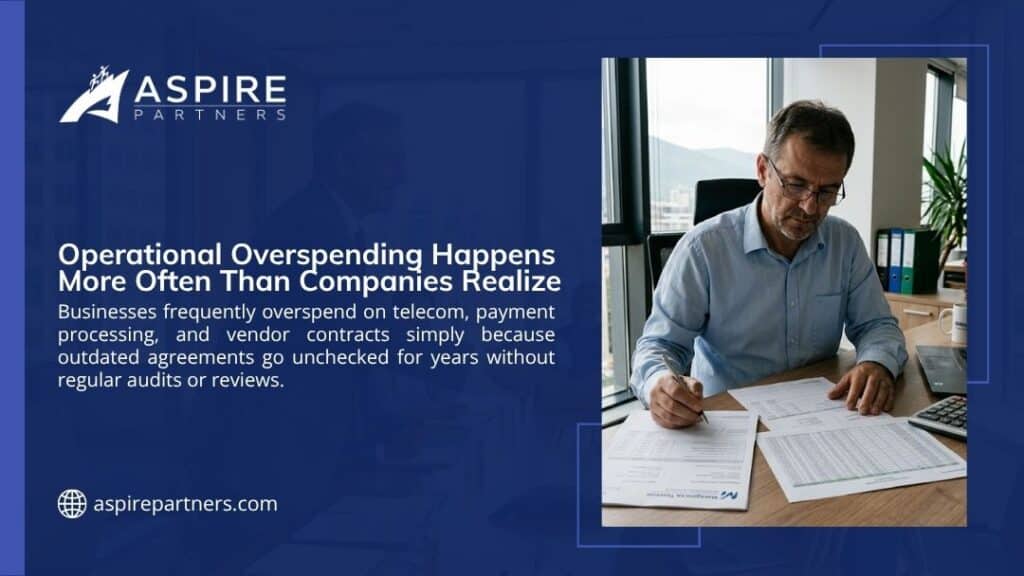
Operational inefficiencies appear in almost every industry. Many business owners simply lack the time to review vendor agreements, payment systems, technology contracts, or operational expenses closely. Over time, unnecessary costs accumulate quietly. That creates opportunities for cost-reduction specialists. Several market pressures explain the demand for external cost-reduction help, and one recent article breaks each of them down.
| Common Expense Categories | Potential Business Concerns |
| Telecom & Technology | Outdated contracts and inflated pricing |
| Payment Processing | Excessive transaction fees |
| Healthcare Administration | Revenue leakage and claim denials |
| Commercial Lending | Poor financing structures |
| AP Automation | Inefficient payment workflows |
| Legal Protection Services | Risk exposure and compliance gaps |
Professionals with strong business relationships often encounter these issues naturally through conversation. That is one reason companies like Aspire Partners position themselves around operational savings rather than traditional product sales. Their model focuses on identifying hidden inefficiencies businesses may overlook.
How Aspire Partners Fits Into This Business Model
Aspire Partners operates within the relationship-based referral economy. The company works with professionals who already possess business relationships and professional networks. Instead of asking members to become technical consultants, Aspire handles the operational complexity through its vendor ecosystem.
That structure matters because many professionals want recurring income without managing fulfillment.
Aspire’s positioning centers around simplicity: identifying opportunities, making introductions, allowing specialists to conduct evaluations, and earning residual compensation when savings materialize.
The company also emphasizes affordability compared with traditional franchise opportunities. Many franchise systems require substantial upfront investment, long-term commitments, staffing, and operational management. Aspire positions itself differently by focusing on relationship leverage rather than operational ownership.
Professionals considering executive-focused side income opportunities can also explore side hustle ideas for executives with business experience.
Why This Appeals to Executives, Consultants, and Retirees
Different professionals enter relationship-based income models for different reasons. A retiree may want intellectual engagement without operational stress. A consultant may want recurring revenue beyond billable hours. A former executive may miss the business environment but no longer wants corporate politics.
A connector may simply recognize that years of relationship-building should produce more financial value. What unites these groups is leverage. Instead of building from zero, they begin with credibility already established inside their professional network.
That shortens the trust cycle dramatically. Many also appreciate the flexibility. Relationship-based opportunities usually allow professionals to continue full-time careers, consulting practices, or retirement lifestyles without rigid schedules.
And unlike traditional businesses, they often avoid inventory, payroll, office leases, staffing, and operational fulfillment. That simplicity explains much of the appeal.
Can You Build Passive Income Without Becoming a Salesperson?
Yes, but only if the model prioritizes trust over pressure. Many people fail in referral opportunities because they approach relationships transactionally. They push irrelevant offers, over-contact their network, or sound desperate for commissions.
Strong connectors operate differently. They identify legitimate business needs and make introductions only when value exists. That protects relationships. The most sustainable referral ecosystems rely on credibility, relevance, and timing rather than persuasion tactics.
Professionals who already act as trusted advisors often adapt naturally because they understand business pain points and know how to facilitate conversations without forcing them. That is one reason relationship-based models feel more authentic for experienced professionals than aggressive sales environments.

What Makes Relationship-Based Income More Sustainable Than Trendy Side Hustles
Trendy side hustles rise and collapse constantly. A few years ago, everyone talked about dropshipping. Then crypto. Then AI-generated stores. Then influencer automation. Most trends fade because barriers to entry disappear quickly.
Relationship capital behaves differently. Trust compounds over time. A respected professional with decades of credibility cannot easily be replaced by automation or viral tactics. That creates defensibility, which many online business models lack. Relationship-based income also avoids several common risks.
| Trendy Side Hustles | Relationship-Based Models |
| Platform dependency | Human trust |
| Constant algorithm changes | Long-term credibility |
| Heavy competition | Relationship differentiation |
| High advertising costs | Warm introductions |
| Inventory or fulfillment | Vendor-managed delivery |
That stability appeals to professionals seeking predictable, recurring income rather than volatile online trends.
How to Start Building a Passive Networking Strategy
Passive networking starts with observation. Most professionals already know business owners, executives, or operators facing operational challenges. The opportunity comes from recognizing where introductions may create measurable value.
The strongest connectors usually stay curious, ask thoughtful questions, maintain relationships consistently, avoid forced selling, and focus on relevance. Social media can support those relationships, but real trust usually develops through long-term credibility rather than online visibility alone.
Professionals interested in additional ideas around monetizing business relationships, side income ideas through your network helpful.
Mistakes That Damage Professional Relationships
Relationship-based income models only work when trust remains intact. That means connectors must avoid behavior that damages credibility. The most common mistakes include:
- pushing irrelevant opportunities
- contacting people only when money is involved
- exaggerating outcomes
- sounding transactional
- forcing conversations too early
Strong connectors understand timing. Sometimes the best introduction happens months after the first conversation because trust requires patience. That patience separates long-term professionals from short-term opportunists.
What Successful Connectors Do Differently
Successful connectors rarely behave like traditional salespeople. They listen carefully. They stay informed. They build trust slowly. They protect relationships. Most importantly, they focus on fit.
A thoughtful introduction carries more value than dozens of cold pitches because trust amplifies relevance. That approach often creates a compounding effect. As credibility grows, referrals become easier because people remember who consistently connected them with meaningful solutions. That is how relationship equity turns into a recurring opportunity.
A Smarter Way to Create Long-Term Income From Existing Relationships
Many professionals underestimate the value sitting inside their existing network. Years spent building relationships, helping colleagues, solving problems, and earning trust may already represent a real business asset. The challenge is finding a structure capable of turning those relationships into recurring income without creating operational headaches.
That is where relationship-based referral ecosystems continue attracting experienced professionals. Aspire Partners positions itself around that exact idea: helping professionals leverage existing business relationships while vendor specialists handle implementation and delivery.
People exploring how recurring compensation models work often come across the do the work once get paid for years business model, where a single upfront effort can continue generating income over time. Those interested in real-world experiences can read member testimonials and success stories.
Questions Professionals Ask Before Starting
Do I need sales experience?
Not necessarily. Relationship-based models depend more on credibility, communication, and thoughtful introductions than traditional closing skills.
Can this work alongside a full-time job?
Many professionals explore referral partnerships while maintaining existing careers because the structure usually offers scheduling flexibility.
How long does residual income last?
That depends on the agreement and client relationship. In many models, recurring compensation continues while the business relationship remains active.
What types of businesses qualify?
Companies with operational expenses, vendor contracts, payment systems, healthcare administration, or technology infrastructure may benefit from evaluations.
Do I need to manage accounts?
In structured referral ecosystems, specialists typically handle implementation, analysis, and ongoing support.
Is this similar to franchising?
Some professionals compare it to a low-cost franchise alternative because it offers business infrastructure without traditional franchise overhead.
Where Relationships Become More Than Conversations
For decades, professionals treated networking as a career activity rather than a financial asset. That perspective has shifted because trust now carries measurable business value. Companies spend millions trying to earn credibility through advertising, while experienced professionals already possess something more powerful: established relationships.
That creates opportunity. Connectors, advisors, executives, consultants, and retirees no longer need massive startups, complicated online businesses, or expensive franchises to create recurring income. In many cases, strategic introductions backed by trust can produce long-term value without employees, inventory, or operational complexity.
And that is why passive networking continues gaining attention among professionals who understand that relationships, when handled carefully, can become one of the most durable forms of business capital.
Professionals ready to explore whether this type of opportunity aligns with their background can learn more directly by contacting Aspire Partners or requesting additional details through the company’s information request page.