

Spend a career building relationships with owners, CFOs, and operations leaders, and that network becomes the most valuable thing you own. So when someone invites you into a “partner program,” the first question is not what it pays. It is what you would be attaching your name to.
A referral partner program and an MLM can both use personal recommendations, but they can differ in how participants earn, whether recruiting is rewarded, and who buys the product or service. Check the compensation plan and written agreement before deciding what kind of opportunity you are considering.
The Short Answer: What to Compare
A referral partner program commonly compensates a partner for a direct introduction that leads to an eligible customer, sale, or other result. The payment may be a fixed fee, commission, or recurring share; the contract sets the trigger and duration. Some programs may also have more than one referral tier, so the label alone does not tell you how compensation works.
An MLM distributes products or services through a network of participants, often arranged in downlines. Participants may earn from their own sales and, depending on the plan, from activity by people they recruit. That structure is different from a direct referral arrangement, but an MLM is not automatically an illegal pyramid scheme.
A downline is a useful signal to investigate, not a complete legal test. The FTC says it evaluates an MLM’s compensation structure based on the facts and how the plan operates, including its incentives, marketing, participant experiences, and sales to customers outside the network. See the FTC’s business guidance on multi-level marketing before treating any single feature as conclusive.
Referral Partner Program vs MLM: A Quick Comparison
| What to compare | Referral partner program | MLM |
|---|---|---|
| Typical compensation source | A qualifying result from a customer or company you directly refer; exact triggers vary by agreement. | Personal product or service sales and, under some plans, activity within a participant network. |
| Recruiting and downline | May be direct-only, but check whether the plan also rewards recruiting or partner referrals. | Usually organized through multiple participant levels or a downline. |
| Costs to participate | Varies. Check membership, training, marketing, and other required fees. | Varies. Check for starter purchases, ongoing product orders, training, and other expenses. |
| Who sells or delivers? | Depends on the agreement. Some providers handle sales and fulfillment; others expect partners to sell. | Participants commonly market or sell products or services; duties vary by company. |
| What to verify | Who qualifies as a customer, what triggers payment, attribution, duration, and termination terms. | Who ultimately buys, how compensation is earned, required costs, and whether recruitment is needed for rewards. |
An illegal pyramid scheme is not simply another name for an MLM.
The FTC distinguishes them by examining how the compensation structure works in practice and whether rewards are tied to real customer demand or incentives to recruit and purchase.
How Aspire Partners’ Referral Model Is Described
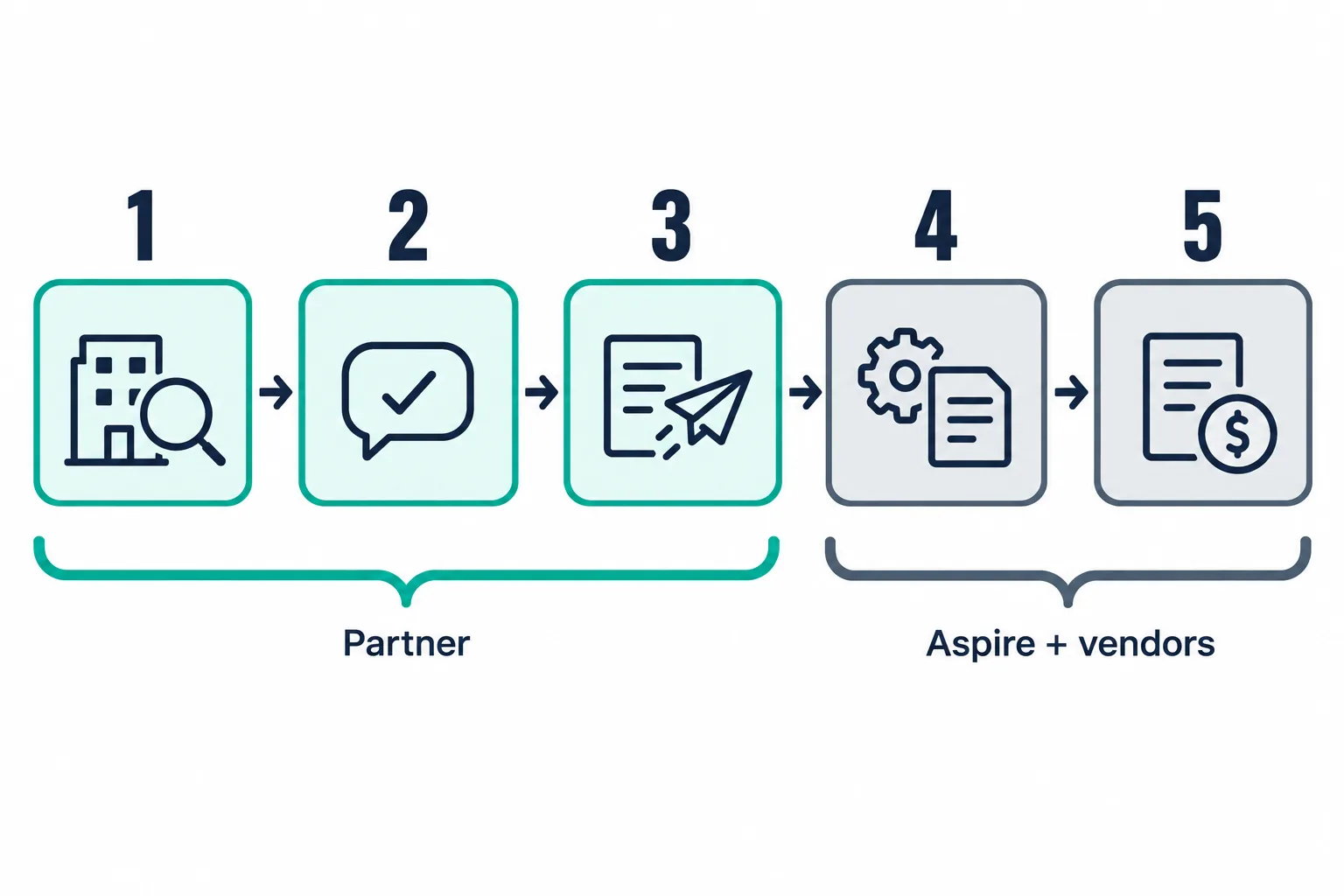
Aspire Partners’ website presents its model as professionals introducing companies to providers, while Aspire and its vendor network handle audits, analysis, presentations, contracts, and implementation. Its service list includes technology, IT and AI optimization, software and SaaS, healthcare revenue cycle management, benefits, shipping and logistics, accounts payable, commercial payments, business capital, legal services, identity protection, and vendor contracts.
For a broader overview of the model, see Aspire’s guide to referral-based business opportunities for professionals; this article focuses on how a referral arrangement differs from MLM.
The public website describes the partner’s role as introduction-focused. The current Business Consultant Agreement uses broader language: it appoints the consultant as a sales representative to promote services and says candidates are directly solicited. Ask Aspire to explain exactly what outreach and sales activity the agreement requires before signing.
A practical process may look like this:
- Identify a business that may have a need covered by an Aspire service.
- Ask whether the decision-maker is open to a conversation. Confirm what you may say and how to describe your relationship with Aspire.
- Submit the referral using Aspire’s current process, and share contact details only with the appropriate permission and in line with the approved process.
- Aspire and its vendor team handle the specialist work described for the service, such as analysis, presentations, contracting, and implementation.
- Payment depends on the applicable service terms and qualifying activity. Review the schedule for the payment trigger, calculation, timing, and duration.
Do not describe every service as “find savings or no fee.” Aspire says many cost-reduction and recovery solutions have no upfront client cost, but the service terms determine what the client pays. Separately, Aspire Partners Pro is a partner membership: the homepage currently lists $97 per month or $997 per year, with the first 30 days included. Check the current Aspire Partners information for updated pricing and terms.
How MLM Works, Structurally
In an MLM, a company typically distributes products or services through participants who may recruit additional participants, forming a downline. A participant may earn from their own sales and may receive compensation related to sales or purchases within that network, depending on the plan.
The legal question is not settled by the words “MLM,” “direct sales,” or “referral.” The FTC advises people to examine the compensation plan, the real source of customer demand, participant expenses, recruitment incentives, and earnings claims. Its consumer guide to MLMs and pyramid schemes also recommends reviewing the paperwork, costs, and likely income before joining.
Starter kits, monthly volume requirements, and personal purchases can be important costs to investigate, but they do not all appear in every MLM. Ask which purchases are optional and whether declining them affects eligibility for compensation or rank.
Referral Program vs Affiliate Program vs MLM
These three terms get used interchangeably. They are distinct.
A referral program usually relies on a direct introduction or recommendation. An affiliate program generally tracks promotion through a link, code, or other attribution method. These labels can overlap, and the payment structure may differ from one program to another. An affiliate marketing overview explains the common tracked-link model; read any program’s own terms to see whether it pays only on your direct referrals or also includes additional tiers.
An MLM is defined by its participant network and compensation structure, not simply by whether someone makes a referral or earns a commission. Do not assume that an affiliate program is single-level or that every business calling itself a referral program has no recruitment incentives.
Seven Questions to Ask Before Joining
Ask these before you agree to anything:
- What exactly must I do: make an introduction, solicit prospects, sell, or close?
- What event triggers payment, and is the payment based on my own referral, a customer sale, or recruited participants?
- Can I earn without recruiting anyone? Is recruiting needed to qualify for a commission, bonus, or rank?
- Who is the end customer, and where does the money used for compensation come from?
- What fees and expenses will I pay to join or remain eligible, including membership, inventory, training, and marketing?
- Can I review the full compensation plan, contract, refund policy, and termination terms before I commit?
- Do my employer’s policies, client agreements, or professional rules require approval or disclosure before I accept referral compensation?
Ask for clear written answers. If the company will not explain the costs, duties, customer value, or payment conditions, pause and get independent advice before you introduce anyone.
Why This Distinction Matters More for Executives
For most people, joining the wrong program costs money. For a consultant, fractional CFO, or former sales leader, it costs relationships that took twenty years to build. That asymmetry is the reason to be careful.
It also explains why a warm introduction carries commercial weight a cold email never will: your credibility travels with it. You already know this, which is why you have probably made dozens of introductions for free over the years.
Before recommending a service, understand what the provider does, what the customer may pay, and how you are compensated. Keep claims about savings or income within the limits of the provider’s approved materials and your written agreement.
How to Evaluate Compensation and Earnings Claims
No single commission formula proves that a program is legitimate. Review the full plan and ask:
- Is compensation triggered by an actual customer purchase, a completed service, collected revenue, verified savings, or another event?
- Does the plan pay for direct referrals, recruiting, or both?
- Can you see how the amount is calculated and when it is paid?
- What costs, refunds, cancellations, chargebacks, or client nonpayment can reduce or end compensation?
- Are earnings examples supported by typical results after expenses, or are they only exceptional examples?
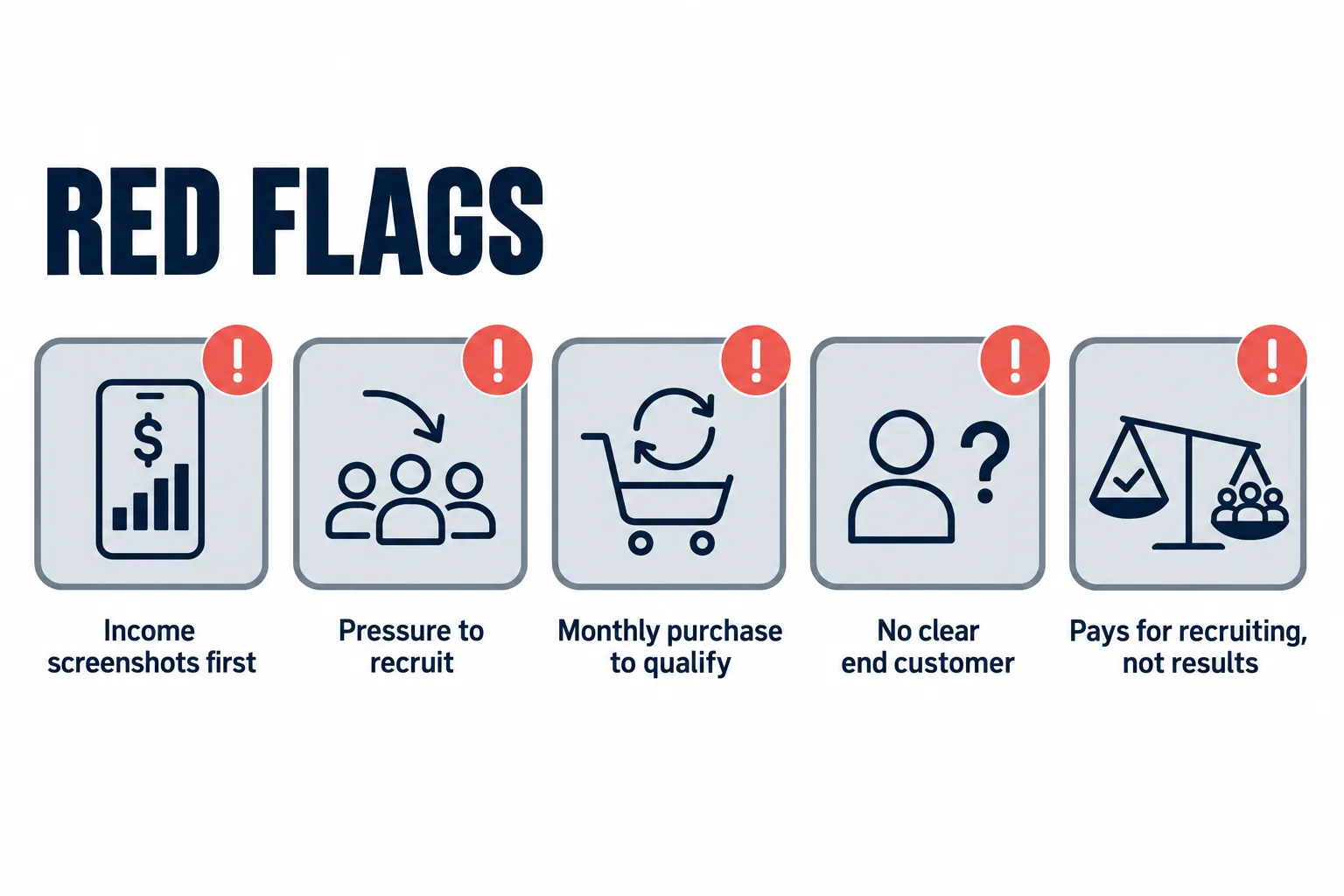
Red Flags Worth Walking Away From
- Income screenshots before anyone explains the product.
- Pressure to recruit friends and family.
- A required monthly purchase to stay “qualified.”
- Vague answers about who the paying end customer is.
- Compensation that rewards recruiting more than delivering results.
Also pause if the company will not provide the agreement, avoids questions about expenses, or urges you to make earnings or customer-savings claims it cannot document.
FAQs
Related readingHow to Get Paid for Making Business Introductions Without SellingRead the guide →Frequently asked questions
Is a referral partner program the same as an MLM?
Is every MLM a pyramid scheme?
Can a referral program have a downline?
Can referral partners earn recurring compensation?
What is the 80/20 rule in affiliate marketing?
Review the Terms Before You Join
If you are considering Aspire Partners, review the current membership information, service details, and written agreement before deciding whether the model fits your network and professional obligations. For questions about the program, contact us.