

If you are considering a referral partner role alongside your consulting or executive work, you want to know when it might start paying. There is no universal timeline. Payment depends on the program, the service, whether the referral qualifies, the company’s decision and implementation process, and the applicable compensation terms.
Aspire Partners describes its program as an introduction-focused role: you connect a business with Aspire and its provider network, and specialists handle the detailed review and service work. The exact payment trigger and timing vary by service and agreement.
The short answer: there is no set payment date
You may be able to make an introduction soon after joining, but that does not mean compensation starts immediately. A referral may need to be accepted, reviewed, approved by the business, and activated under the terms of the relevant service. Some services may pay based on qualifying account activity; others may have different conditions.
Related readingHow to Get Paid for Making Business Introductions Without SellingRead the guide →The practical question is not “How many months until I get paid?” but “What event triggers compensation for this service, and what conditions must stay in place?”
Aspire’s service pages state that compensation is performance-based and not guaranteed. Review the current program agreement for the answer.
Consumer referral apps and professional partner programs run on completely different clocks
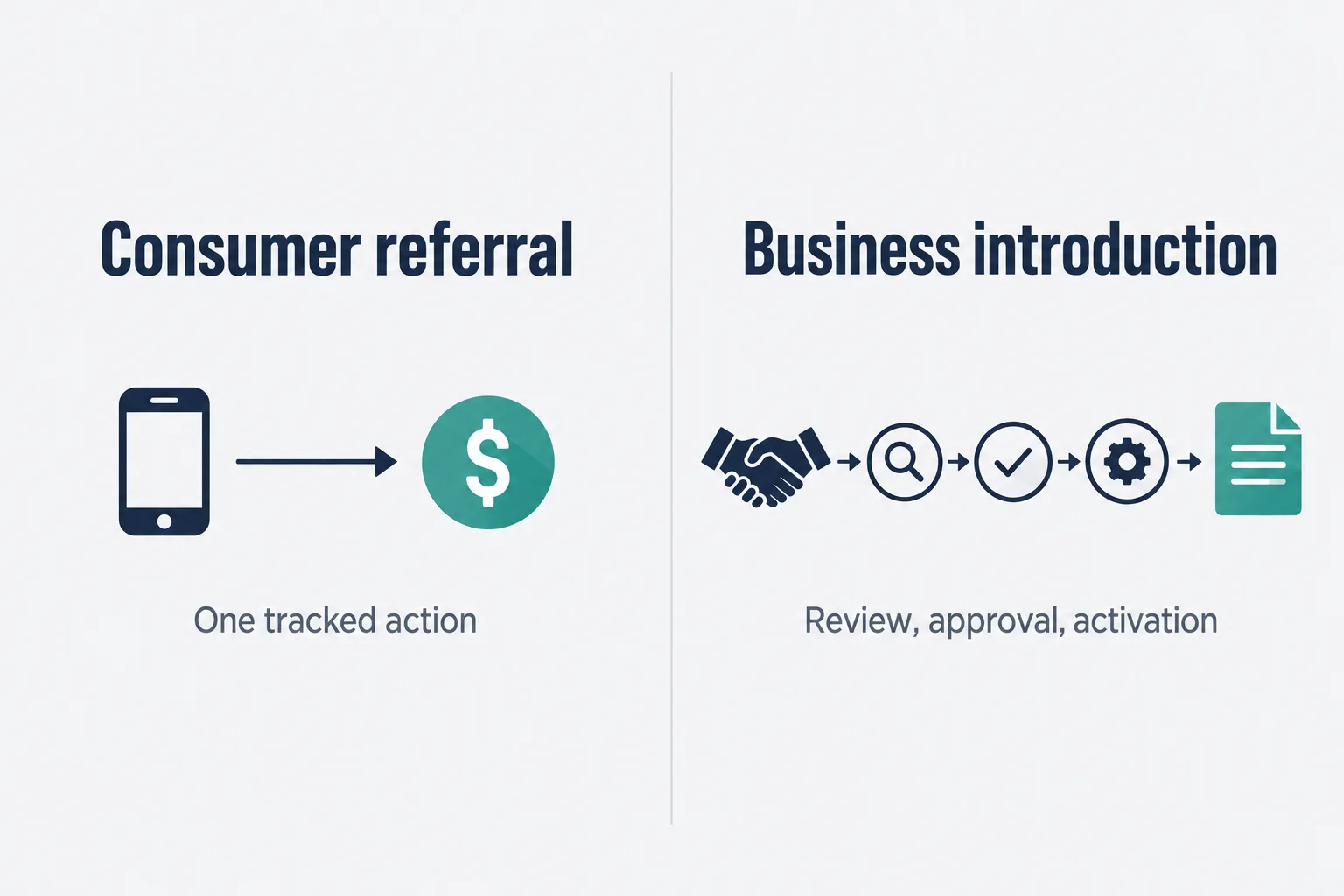
Most people asking how long it takes to earn money from referrals arrive carrying examples from a different category: app sign-up bonuses, dollar-per-referral offers, or cash-back invite codes. They are useful context, but their payout rules do not predict a business-to-business partner program.
Consumer referral bounty. One action triggers the reward, usually a sign-up or first purchase. The payout is often fixed, then subject to validation and a payment schedule. Some affiliate programs use net-30 or net-60 terms, but the details vary by program. Slash’s overview of affiliate payment methods is general context, not an Aspire payment schedule.
Consumer affiliate links. Income depends on audience reach, tracking rules, conversion, and payout terms. Without an existing audience, building consistent traffic can take time. A consumer affiliate’s timeline is different from a professional making a direct business introduction.
A business cost reduction partnership. A professional introduction may lead to a specialist review, a business decision, and a qualifying account or transaction. Compensation depends on the individual program’s rules. It may recur under some arrangements, but neither timing nor duration should be assumed without checking the agreement.
The difference is the process: a consumer offer may be triggered by a single tracked action, while a business opportunity may require review, approval, and service-specific qualification.
What happens between your introduction and potential compensation
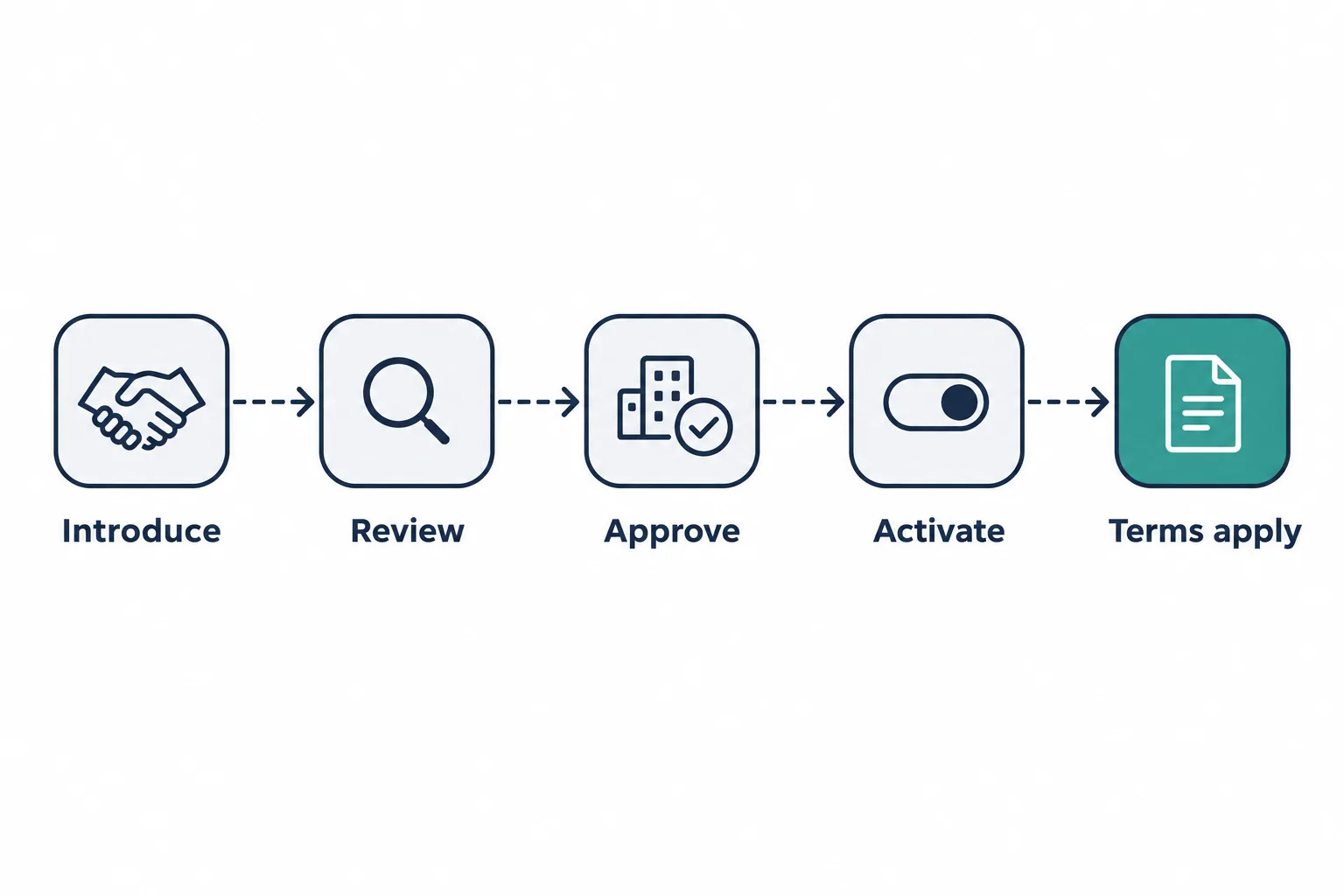
The wait can feel like a black box until you know what steps may be involved. The exact sequence depends on the service and provider, but a referral may move through stages like these.
Step by step: introduction to a qualifying opportunity
Step 1. Identify a company that may benefit from a review. Software subscriptions, technology, shipping, employee benefits, accounts payable, and vendor contracts are among the areas listed on Aspire’s Services. A possible fit is a reason to ask a question, not proof that the company is overspending or will qualify.
Step 2. Ask whether the decision-maker is open to an introduction. You do not need to diagnose a technical or financial problem. Describe the specialist review accurately, avoid promising savings or results, and get permission before sharing someone’s information.
Step 3. Submit the referral through the current process. Provide the business contact information and context requested by Aspire. Confirm what information can be shared and what consent is required under the current program instructions.
Step 4. Aspire or its provider specialists assess the opportunity. Depending on the service, specialists may conduct discovery, review authorized information, present recommendations, and manage approved next steps. Do not assume every referral involves an audit, negotiation, contract, or implementation.
Step 5. Compensation follows the applicable terms. If the referral qualifies, the agreement explains what event makes compensation payable and whether payment depends on ongoing account activity. The trigger may differ across services.
Your role may be limited to the introduction, but the partner program still requires accurate communication and follow-up. The time spent on an introduction does not determine when compensation becomes payable.
Where the waiting may happen
The delay can occur at several points:
- Scheduling discovery. The decision-maker may need time to respond or coordinate with colleagues.
- Gathering information. The company or provider may need invoices, contracts, usage data, or other authorized records.
- Qualification and review. The specialist determines whether the referral fits the service and current provider criteria.
- Internal approval. A CFO, owner, board, or finance committee may need to review the recommendation.
- Activation or implementation. If the company proceeds, the service may need to become active before a compensation condition is met.
- Payment processing. The program agreement may specify a payment cycle after the qualifying event.
These are possible stages, not a guaranteed sequence or schedule. General B2B sales-cycle research can offer background on how business decisions vary, but it does not establish an Aspire referral payment timeline. Aexus’s article on B2B software sales cycles is relevant only in broad context; software sales-cycle estimates should not be treated as a forecast for Aspire.
A practical timeline: follow the stages, not a promised month
Aspire does not publish one standard number of weeks or months for a partner to receive compensation. Instead of treating the following as a forecast, use it as a checklist of what to confirm for each referral.
Before submitting a referral
Check whether the service fits the company’s situation, identify the right decision-maker, and ask permission to make the introduction. Aspire’s program currently lists a membership price of $97 per month or $997 per year, with the first 30 days included; verify these details on the site before relying on them. Membership cost is separate from any potential referral compensation.
After Aspire receives the referral
Ask how the referral is qualified, who follows up, what information the company may need to provide, and what status updates the program offers. The company’s response time and the provider’s review process can affect what happens next.
Before expecting payment
Check the applicable service terms for the payment trigger, amount, timing, duration, and any active-account or performance conditions. Ask whether compensation can be delayed, adjusted, or discontinued if the client’s account changes. Do not rely on another service’s payout example.
Seven factors that may affect the timeline
- Quality of your network. A relevant, trusted introduction may make it easier to reach the right decision-maker, but it does not guarantee qualification or payment.
- Company size and complexity. More locations, suppliers, or stakeholders may mean more information to review and more people involved in a decision.
- Which service fits. Technology, shipping, benefits, payments, and other service areas have different provider processes and compensation conditions.
- Consistency. Making relevant introductions regularly gives you more opportunities in progress, though results are not guaranteed.
- Responsiveness. The company’s ability to schedule discovery and provide authorized information can affect the next steps.
- Use of available support. Aspire Partners Pro describes training, tools, scripts, and access to expert support. Confirm what is included in the current program.
- Program terms. Qualification rules, payment triggers, account activity requirements, and payment schedules directly affect when compensation may be due.
Why the compensation structure matters
A one-time reward and a recurring revenue share work differently. A one-time reward is tied to a defined qualifying action; a recurring arrangement may depend on an account or service remaining active. Aspire’s pages say terms vary by service, provider, activity, and program agreement, so do not assume that every referral pays monthly or continues for a fixed number of years.
A longer process may reflect the steps needed to qualify and activate a service, but that does not prove a larger payout. Before joining, compare the membership cost with the written compensation terms and the time and work required.
What 5 to 10 hours a week may involve
Time spent may include learning about the services, identifying companies that could be a fit, asking for permission to introduce a decision-maker, submitting referrals, and following up appropriately. Aspire and its providers handle specialist work within the service scope, but you still need to build relationships and communicate accurately.
This may fit alongside other professional work for some people. Before joining, review your employment agreement, confidentiality obligations, outside-business policies, and potential conflicts of interest. Aspire’s materials encourage prospective partners to check these obligations.
Protecting your reputation while you wait
Here is the concern experienced professionals actually raise, and it is rarely about money: what happens to my relationship with this person if the introduction goes badly?
The safest approach is to make a permission-based introduction, describe the service as an opportunity for a specialist review, and avoid promising savings, coverage, approval, or compensation. Let the provider explain its service, eligibility, and terms.
Also confirm any compensation or other relationship that should be disclosed when you recommend or endorse a service. The FTC’s small-business advertising guidance explains that material connections can affect how people evaluate an endorsement. Follow the guidance and any rules that apply to your role and communications.
An introduction can still affect your professional reputation, even when you are not conducting the review. Choose opportunities that fit the company, communicate the limits clearly, and stay within the approved partner materials.
Questions to ask before joining a referral partner program
Use these questions for any program you are evaluating:
- Is compensation one-time or recurring, and what event triggers payment?
- What validation, qualification, or activation steps must happen first?
- How and when are eligible payments processed?
- Can compensation change or stop if the account becomes inactive?
- What does the company being introduced pay, if anything, and when?
- What training, tools, and support are included in the membership?
- Can you review the current agreement and speak with partners about their experience?
A program should be able to explain its terms clearly. If the payment trigger or conditions are unclear, ask for the current written agreement before making an income decision.
Frequently asked questions
How long does it take to receive a referral bonus?
Which apps or programs pay $100 or more per referral?
Can I earn $1 per referral, and is volume a viable strategy?
Who pays the most for referrals?
Do I need cost-savings or procurement expertise to start?
The honest framing is the one worth ending on. This is measured in months, not days. What you build during those months is the part that keeps paying long after the building is done.