

Why do companies outsource cost reduction? Often, they want specialist analysis without building a permanent cost-optimization team. External providers can review spending, contracts, and operational processes when the need is real, but the company does not want to add full-time headcount. That does not mean every outsourcing arrangement is free or automatically cheaper; the business still has to compare fees, transition work, controls, and exit terms. For professionals, the shift also creates demand for credible introductions to cost-saving specialists.
Quick Answer: Why Do Companies Outsource Cost Reduction?
Companies outsource cost reduction when they need to lower operating costs, access specialist analysis, respond to changing demand, and free internal leaders for core work. Outsourcing can replace some fixed internal expense with variable or more predictable external spend, but savings are not automatic: service fees, transition costs, vendor management, security, and exit terms belong in the comparison.
What Does Outsourcing Cost Reduction Mean?
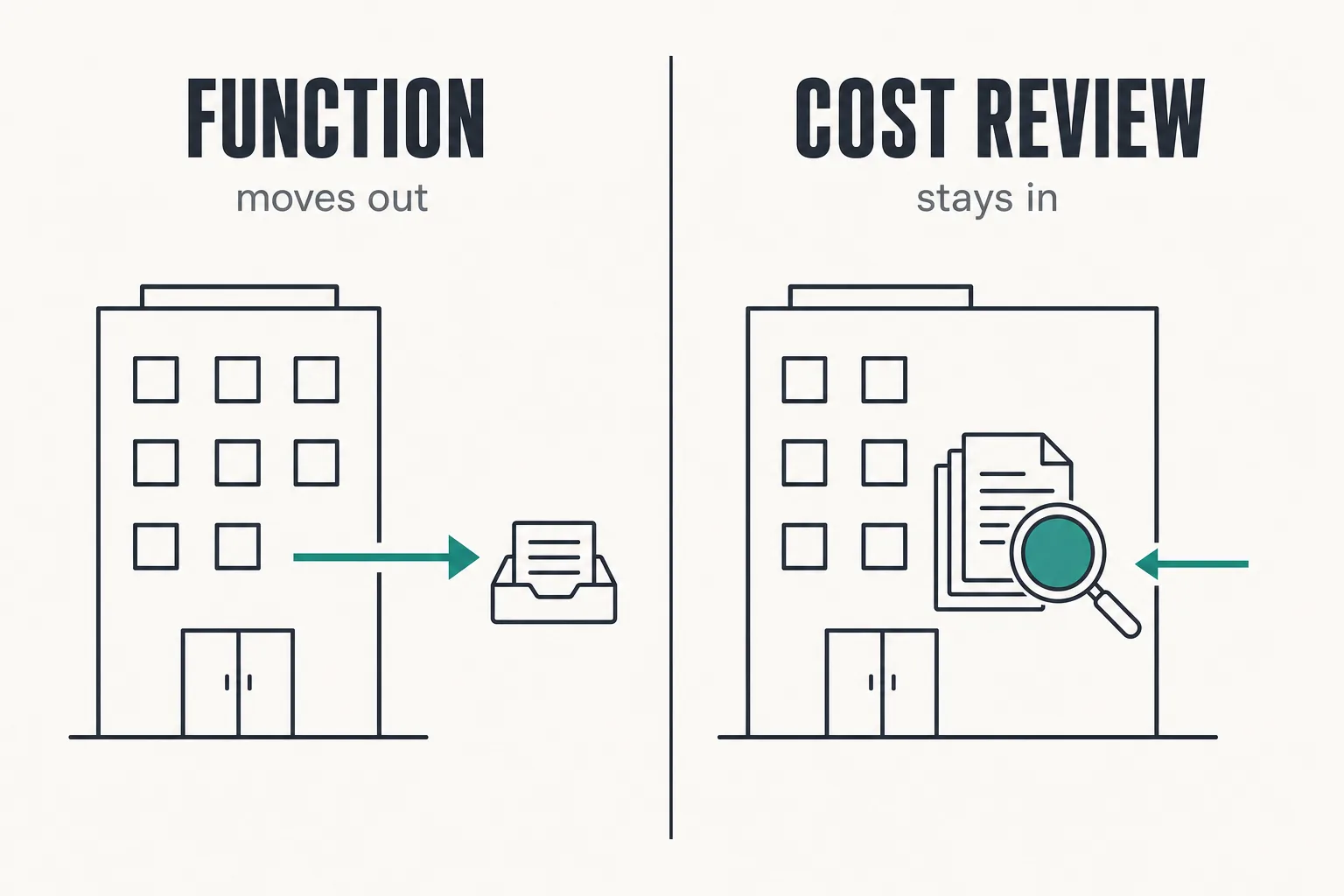
The phrase can describe two different decisions. A company can outsource a business function, such as IT support or payroll, or it can outsource the review of its costs to a specialist. The first shifts operational delivery outside the company. The second brings in expertise to find waste, recover overcharges, benchmark suppliers, review contracts, or improve a process.
This article focuses mainly on the second decision: using outside specialists to identify and evaluate cost-saving opportunities. For a broader definition of outsourcing, Investopedia’s outsourcing overview explains how companies use external providers to reduce costs, improve efficiency, and focus on core work.
Outsourcing Can Make Some Costs More Flexible
Payroll, benefits, office space, and equipment are generally fixed internal costs over a given period. An external arrangement can replace some of that expense with variable or more predictable spending, but retainers, minimum volumes, implementation fees, and management costs may still apply.
The financial difference depends on the work being outsourced, the provider’s pricing model, the contract terms, and the company’s existing costs. Four common drivers explain why businesses consider outside help.
Driver 1: Avoiding the Full Cost of Building Internal Capacity
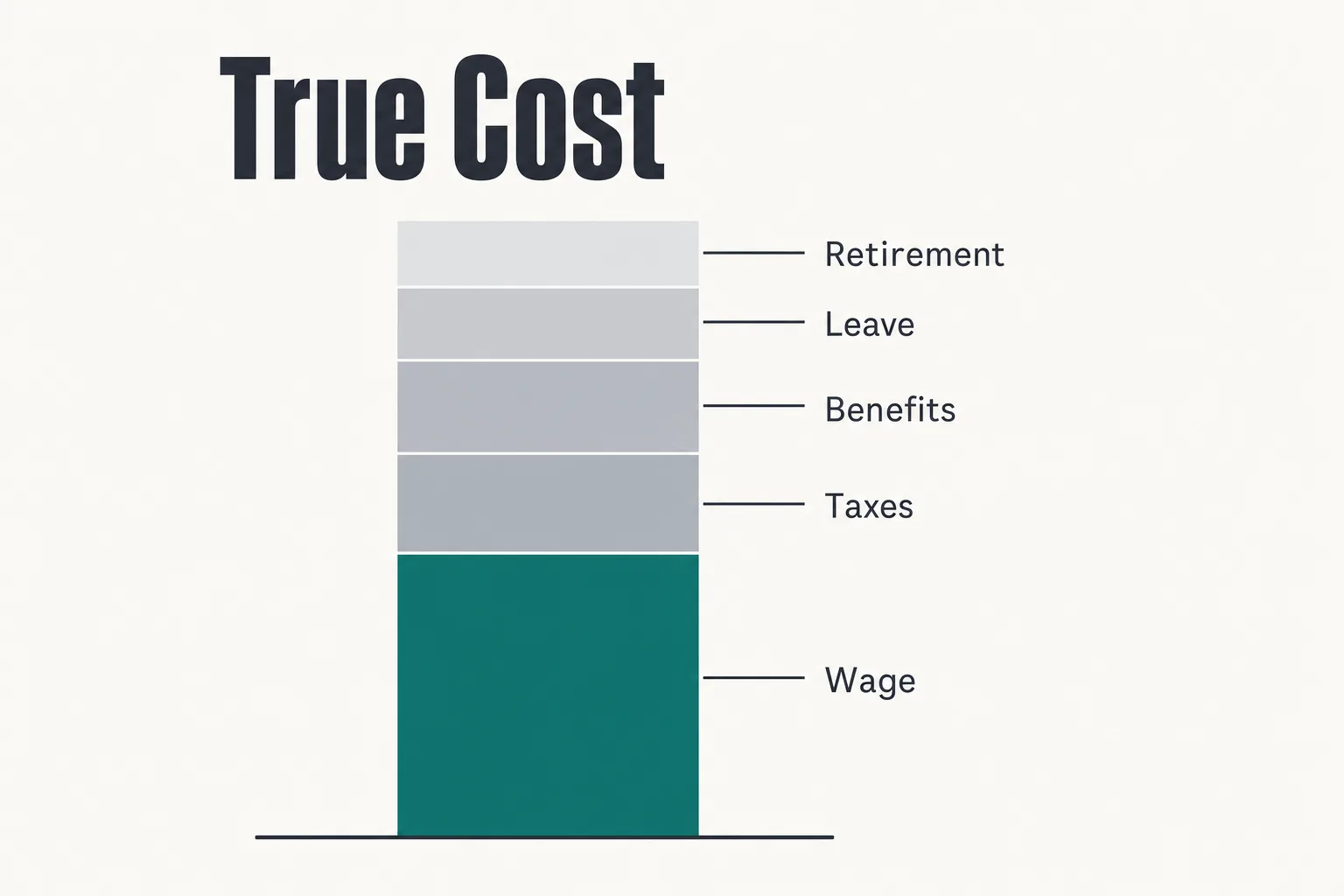
Salary is the number people quote. It is not the number the company pays. Employer payroll taxes, health coverage, paid leave, workers’ compensation, and retirement contributions all stack on top of the base wage.
If the arrangement is offshore or nearshore, labor arbitrage may reduce the base cost, but that is a different consideration from hiring a specialist to review a company’s existing expenses. For cost-reduction work, the relevant comparison is the full cost of internal capacity versus the provider’s fee and the value of the identified savings.
Labor is only one possible savings lever. Contract pricing, supplier terms, unused technology, payment processes, and operational waste may create larger opportunities than headcount alone.
Driver 2: Accessing Infrastructure and Tools Already Built
Depending on the scope, an external provider may bring specialized workspace, hardware, software, audit tools, benchmarks, or supplier knowledge. That can be useful when a company needs expertise periodically rather than maintaining every capability internally.
Those same categories are where companies quietly overpay: software licenses nobody uses anymore, telecom contracts nobody renegotiated, shipping rates set years ago, vendor agreements that auto-renewed three times. None of it shows up as a crisis. It just sits there.
None of it shows up as a crisis. It just sits there.
Driver 3: Getting Specialist Expertise Without Building a New Team
Recruiting, screening, onboarding, and ramp time carry real cost and real calendar time. A 2022 SHRM benchmarking report placed the average cost per hire at nearly $4,700, before anyone has produced a day of work. SHRM’s report is a dated benchmark rather than a current universal cost, but it illustrates why companies compare external expertise with the expense of building another internal team.
An outside specialist may already have the tools, processes, and experience needed for a defined review. That does not make hiring and training costs disappear; it may allow the company to avoid building a new team for work it does not need every day.
Driver 4: Returning Leadership Time to Higher-Value Work
Billing, support, data entry, expense auditing, and vendor review can consume executive attention far out of proportion to their strategic value. Outsourcing selected work can give leaders more time for customers, growth, risk management, and other core responsibilities.
Current outsourcing guidance also identifies specialist skills, scalability, quality, and risk management as common reasons companies use outside providers, not just direct payroll savings. Robert Walters’ overview of why companies outsource work provides useful context for these broader drivers.
There is also a scale effect. A firm that reviews many contracts or supplier categories may see pricing patterns that a single company encounters less often. That is not a criticism of the internal team; it is a result of repeated exposure to comparable work.
How to Calculate the Real Savings
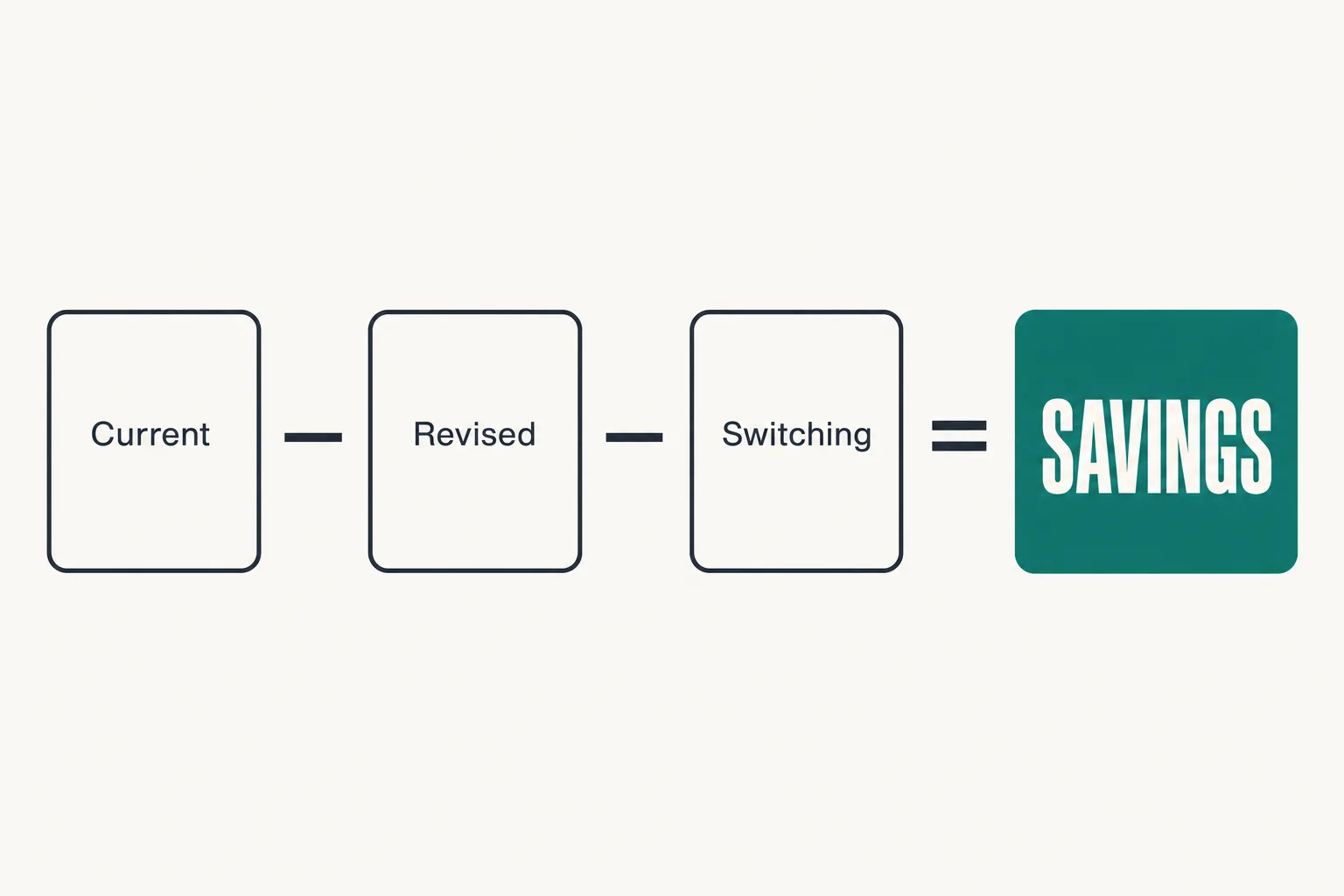
A quoted discount is not automatically a verified saving. A more useful comparison is:
Current annual cost − revised annual cost − implementation, switching, and management costs = first-year verified savings.
The baseline should include the company’s actual invoices, contracts, usage, payment terms, and internal effort. A related business savings audit can review those inputs before a company decides whether a proposed change is worthwhile.
This calculation also helps decision-makers compare a retainer, a contingency fee, or another pricing model on the same basis.
Where Outsourcing Cost Reduction Can Go Wrong
Outsourcing can be useful, but it is not automatically beneficial. The decision becomes weaker when the initial savings model leaves out transition work, oversight, service-quality controls, or the cost of ending the relationship.
Hidden costs can include knowledge transfer, vendor management overhead, quality variance, time-zone friction, data migration, and exit terms that nobody reviewed closely. A 2003 CIO analysis of offshore outsourcing highlights how transition, management, and coordination costs can offset projected savings. It is an offshore-specific historical example, not a universal rule for every domestic specialist engagement. Read the MIT-hosted analysis.
Three more disadvantages worth weighing:
- Never outsource your actual competitive advantage. If it is the reason customers choose you, keep it inside.
- Include upfront fees, retainers, minimum volumes, implementation costs, and exit charges in the total comparison instead of focusing only on the headline price.
- Data security and compliance exposure may rise whenever a third party receives access to employee, customer, financial, or operational records.
- Set clear scope, service levels, ownership, escalation procedures, and continuity requirements before work begins.
- Avoid unnecessary vendor dependency by defining how the company will recover information, processes, and access if the relationship ends.
These risks do not make outsourcing a bad decision. They show why projected savings should be risk-adjusted rather than treated as guaranteed results.
How a No-Upfront-Cost Model Changes the Math
A performance-based arrangement can change when fees are due, but the contract still deserves careful review. The business should understand what counts as savings, how savings are measured, which services qualify, and when compensation becomes payable.
Aspire Partners describes many of its cost-reduction and recovery solutions as having no upfront cost to the business, with fees tied to savings or recovery. Service availability, eligibility, and terms vary, so this is a performance-based model, not a universal guarantee that every review is free. You can review Aspire Partners’ cost-reduction services before deciding whether a particular category is relevant.
This approach is related to performance-based consulting, where compensation is connected to measurable results. It is also separate from joining Aspire Partners Pro, which the website currently lists at $97 per month or $997 per year.
Examples of service categories available through Aspire Partners include technology and telecom, software, vendor contracts, employee healthcare, shipping, healthcare revenue recovery, commercial payments, tariff recovery, and other operational areas. Results and eligibility vary by service and client.
Related readingHow to Earn Residual Income From Business Relationships (2026 Guide)Read the guide →Frequently asked questions
Why Do Companies Outsource Cost Reduction?
Does Outsourcing Always Save Money?
Does Outsourcing Always Turn Fixed Costs Into Variable Costs?
Is Outsourcing Cost Reduction the Same as Outsourcing a Business Function?
What Are the Hidden Costs of Outsourcing?
When Should a Company Keep Work In-House?
What Outsourced Cost Reduction Means for Business Professionals
When companies look outside for cost-reduction expertise, the person who makes a relevant, trusted introduction can create value before the specialist work begins.
Consultants, executives, fractional CFOs, controllers, and B2B veterans already know companies that are overpaying on overhead. They have spent careers building the relationships that make that introduction credible.
The Aspire Partners role is introduction-focused. A professional identifies a possible fit, asks whether the company is open to a conversation, and connects the decision-maker with the appropriate specialists. Aspire Partners and its vendors handle the audit, analysis, presentation, contracting, and implementation.
Professionals who want to understand this model in more detail can review referral-based business opportunities for professionals, including how a relevant introduction moves from an initial conversation to a specialist evaluation.
Compensation is performance-based and varies by service and agreement. Some qualifying accounts may generate recurring compensation while the customer, account, and applicable terms remain active; income is not guaranteed.